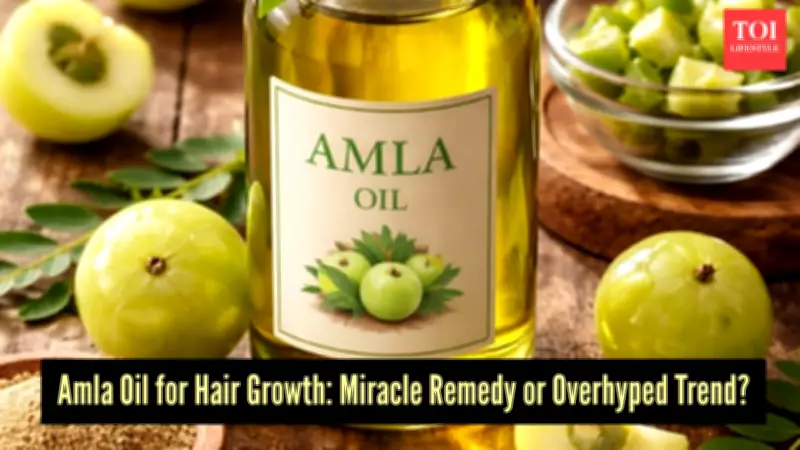
Amla Oil for Hair Growth: Separating Scientific Facts from Popular Myths
In today's beauty landscape, traditional remedies often resurface with viral claims, and Amla oil consistently ranks high on the list. Our grandmothers swore by it, and modern influencers tout it as a secret to luscious locks. But does applying this potent Indian gooseberry extract truly accelerate hair growth? When we dissect the biological evidence from the folklore, the reality emerges as nuanced. Here is a comprehensive breakdown of what Amla oil can genuinely achieve for your hair and what it absolutely cannot.
The "Overnight Rapunzel" Myth Debunked
Many seek quick solutions, but the notion that a topical oil can drastically speed up hair growth is fundamentally a myth. Biologically, human hair grows at a relatively fixed rate, approximately half an inch per month. This pace is primarily governed by genetics, age, and overall internal health. No oil, serum, or miraculous supplement on the market can force hair follicles to double or triple this natural speed. If you purchase Amla oil expecting dramatic length gains within days, you are likely setting yourself up for disappointment.
The Real Benefit: Superior Retention and Enhanced Density
If Amla oil does not alter genetic hair growth speed, why do countless individuals report faster growth with its use? The answer lies in retention. When people observe "rapid" growth, they are actually experiencing a significant reduction in breakage and hair fall. You are not growing hair faster; rather, you are preserving the length that your scalp naturally produces. Scientific research robustly supports this, highlighting Amla as a powerhouse for promoting thicker, more resilient hair health.

The Science Behind Maintaining Hair Growth
Amla oil is not a magical cure, but it is a highly effective, scientifically validated treatment. Here is how it functions biologically. It extends the growth phase. Hair undergoes cycles, with the anagen phase being the active growth period. Clinical studies demonstrate that Amla extract boosts the expression of specific growth factors, such as IGF-1 and VEGF. In simpler terms, it signals hair follicles to remain in their active growth phase longer before shedding occurs. It combats the hair-loss hormone. This is arguably its most impressive attribute. Research indicates that Amla acts as a 5-alpha reductase inhibitor, mirroring the mechanism of prescription hair loss medications. By blocking this enzyme, Amla prevents the conversion of testosterone into DHT—the hormone responsible for shrinking hair follicles and causing thinning.
Does Amla Oil Deliver Tangible Results?
It serves as a scalp shield. Amla is one of nature's richest sources of Vitamin C, abundant in tannins, flavonoids, and polyphenols. Daily oxidative stress from urban pollution, UV exposure, and aging weakens the scalp. Amla's potent antioxidants neutralize free radicals, fostering a healthy environment for hair to thrive. It enhances blood circulation. Massaging the oil into the scalp does more than provide relaxation; it stimulates localized blood flow. This delivers essential fatty acids and nutrients directly to the hair bulb, strengthening the hair shaft from within and preventing split ends and breakage.
The Final Verdict on Amla Oil
Using Amla oil for instant hair growth is a myth. However, employing it for maximized, healthy hair growth is a well-supported reality. It is a proven tool for combating daily damage, inhibiting thinning hormones, and sustaining follicle activity. Patience is crucial in this process. Typically, about 12 weeks of consistent, regular application are required to observe noticeable improvements in hair density and strength. Persist with it, and your hair will undoubtedly reap the benefits in the long run.