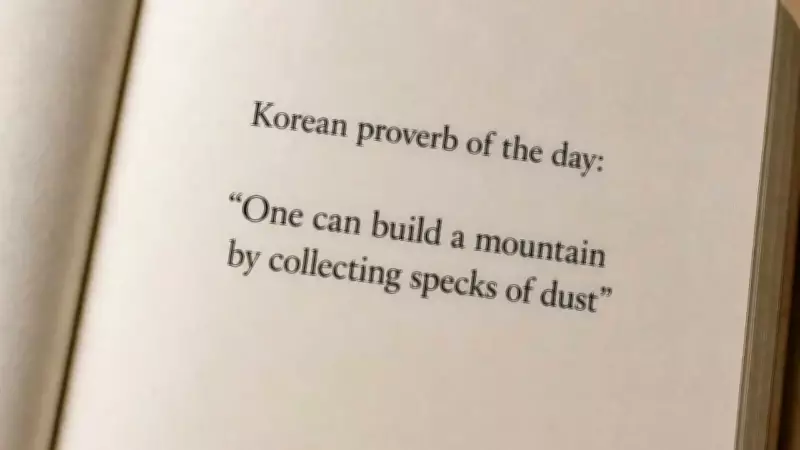
In modern life, people are often preoccupied with grand achievements and instant success. Many desire rapid results in their careers, financial goals, health and fitness, or in acquiring new skills. When progress feels slow, motivation can wane, leading to frustration or even abandonment of goals altogether. However, most long-term victories are not achieved in a single dramatic breakthrough. They are built through consistent, repeated effort over time. Traditional wisdom across cultures has long emphasized the value of patience and gradual progress, a concept frequently highlighted in Korean proverbs, known for their grounded, simple, and relatable messages.
The Proverb's Core Message
The Korean saying "One can build a mountain by collecting specks of dust" conveys a clear lesson about persistence and accumulation. It teaches that small, repeated actions ultimately create significant outcomes. True mastery and enduring success stem from the humble discipline of daily progress, transforming minor deeds into monumental achievements.
Understanding the Proverb
At first glance, the proverb uses a simple image. A single speck of dust appears tiny and insignificant. Yet, when countless particles gather, they can form something as vast as a mountain. This idea has practical applications in daily life: it is the little things, done repeatedly, that truly count. The message is not about speed but about consistency, highlighting that incremental progress typically leads to lasting results.

Why Small Efforts Matter
Many people underestimate small actions because immediate results are not visible. However, regular effort builds momentum. For instance, reading a few pages each day can accumulate into dozens of books over years. Similarly, making small, regular deposits can lead to substantial financial security over time. This proverb teaches that progress results from patient, repeated effort, not sudden success.
The Role of Patience
The proverb embodies the virtue of patience. Creating something meaningful takes time. In an era of instant gratification, we may become discouraged if we do not see immediate progress. Yet sustainable growth usually requires steady effort and persistence. The saying reminds us to trust the journey, not just the destination.
Relevance in Modern Life
In today's fast-paced world, social media often portrays success as instantaneous. People see the final result, not the years of work behind it. This can create unrealistic expectations, leading to comparisons and pressure for quick outcomes. The proverb offers a counterpoint, reminding us that real progress typically begins with small, everyday steps.
Consistency and Long-Term Success
The proverb emphasizes the power of consistency. Small actions, performed regularly, become potent. Whether in education, health, business, or relationships, consistent habits generally yield better long-term results than sporadic, high-intensity efforts. This principle applies to both personal and professional growth. Regular, disciplined practice builds experience, confidence, and improvement over time.
Habits and Progress
Habits are crucial for achieving goals. Daily routines may seem basic, but they significantly impact long-term outcomes. For example, a brief daily workout can lead to improved health over time. Learning one new thing each day accumulates into vast knowledge. The proverb implies that success is often the product of many small, repeated choices.
Enduring Wisdom
Despite changes in technology and lifestyle, the fundamental principle of gradual progress remains relevant. To achieve meaningful goals, people need patience, discipline, and consistency. The proverb endures because it speaks to a universal truth that transcends generations. It also helps during tough times by reminding us that small progress still counts.

Applying the Proverb Daily
- Focus on daily self-improvement rather than instant results.
- Build repeatable processes over time.
- Divide large goals into smaller, manageable steps.
- Be patient with slow progress.
- Regularly save time, money, or effort.
- Never underestimate the importance of small actions.
- Embrace patience as a path to success.
- Keep learning one step at a time.
- Discipline yourself even without immediate rewards.
- Trust long-term work over quick fixes.
- Stick to routines that foster growth.
- Remember that consistency often trumps speed.
Simple Takeaway
The proverb's meaning is clear: small things may seem insignificant at the moment, but when done consistently over time, they accumulate into great achievements. "One can build a mountain by collecting specks of dust" teaches a practical lesson of patience, persistence, and gradual progress. It reminds us that success usually comes from many little efforts, not a single big one. This concept remains highly relevant in our fast-paced world, where consistency and small improvements can make a profound difference, helping us achieve meaningful progress in various aspects of life. The lesson is simple yet profound: even the smallest effort is worthwhile if it is part of a continuous process.