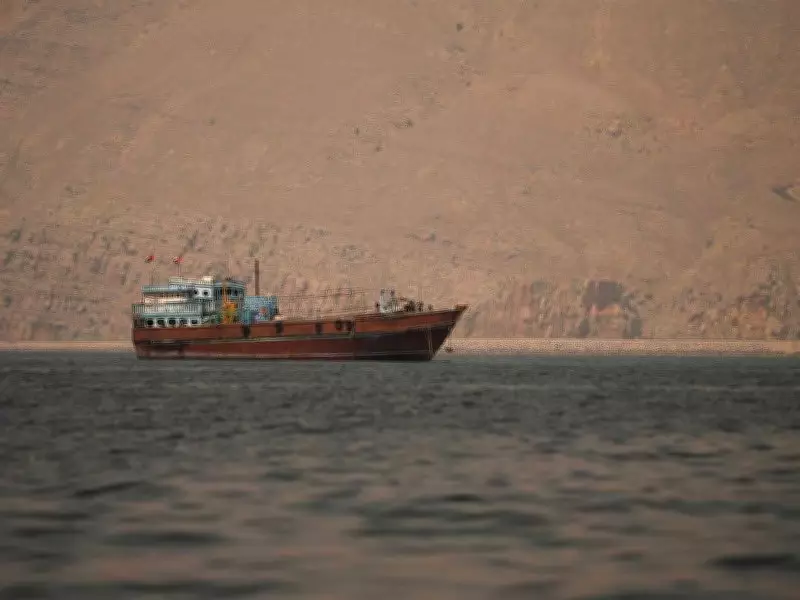
Iran Issues Stern Warning Over Ceasefire Violations
Ibrahim al-Fiqar, official military spokesperson for Iran's Khatam al-Anbiya Central Headquarters, the operational command center coordinating the Islamic Revolutionary Guard Corps (IRGC) and the regular Iranian army, stated on June 28, 2026, that Iran will regulate maritime traffic in the Strait of Hormuz. In a series of posts on X, Fiqar declared that any violation of the ceasefire will be met with a crushing response.
"Any new aggression, regardless of its pretext or the scale of its objectives, will be met with a crushing response. Violating the ceasefire constitutes a breach of Article 1 of the Islamabad Understanding and will lead to a complete halt of all tracks. Under the Islamabad understanding, Iran will regulate maritime traffic in the Strait of Hormuz. Violent vessels will be dealt with more firmly than before," Fiqar posted.
US Attacks and Iranian Retaliation
Fiqar detailed that earlier in the day, US enemy forces attacked five Iranian coastal sites under the pretext of intercepting a violating vessel. He described the Iranian operation as a decisive response to recent American attacks. "This morning, US enemy forces attacked five Iranian coastal sites under the pretext of intercepting a violating vessel. The operation was a decisive response to the recent American attacks," he added.

In a significant escalation, Iran conducted a joint operation using missiles and drones targeting eight US military sites and infrastructure, specifically at Ali Al Salem Air Base in Kuwait and the Fifth Fleet in Bahrain. Fiqar emphasized, "We conducted a joint operation with missiles and drones targeting 8 US military sites and infrastructure at Ali Al Salem Air Base in Kuwait and the Fifth Fleet in Bahrain. We are in charge of traffic arrangements in the Strait of Hormuz, and will deal more firmly with violating vessels than before. Any breach of the ceasefire will be met with a harsh response and will lead to the suspension of all understandings."
Regional Responses: Kuwait and Bahrain
The Kuwaiti Army confirmed that its air defenses are confronting hostile missile and drone attacks. In a statement, the army warned residents that explosion sounds are the result of intercepting hostile attacks and urged compliance with safety instructions from authorities. Bahrain's Ministry of Interior activated alarm sirens, advising citizens and residents to remain calm and seek safe locations, following official news channels.
US Position and Trump's Threat
Earlier on June 28, US President Donald Trump announced that American aircraft struck Iranian missile and drone storage locations and coastal radar sites in response to ceasefire violations. In a post on Truth Social, Trump stated, "United States aircraft just struck Iranian missile and drone storage locations, and coastal radar sites, for violating the Cease Fire Agreement, AGAIN! It is very possible that they will never learn! There may come a point when we are no longer able to be reasonable, and will be forced to militarily complete the job that we very successfully started. If that happens, the Islamic Republic of Iran will no longer exist!"
The US Central Command confirmed the strikes targeted 10 Iranian military sites within and near the Strait of Hormuz, retaliating for an Iranian drone attack on the tanker M/T Kiku.