

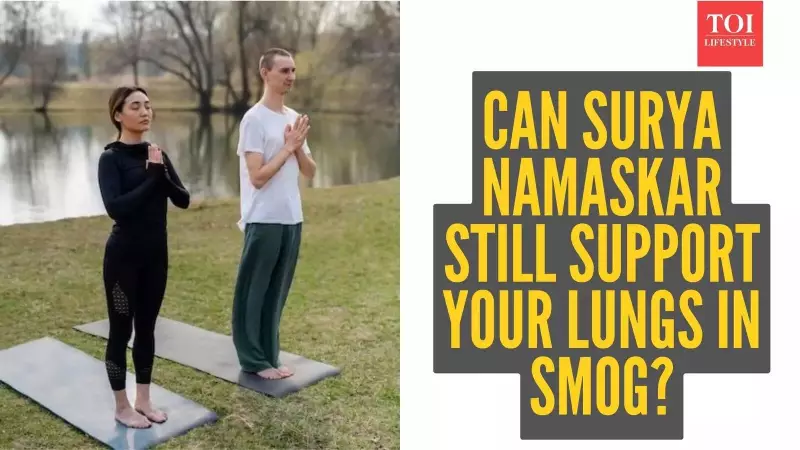
In many of India's major cities, the morning air is thick with haze, turning the simple act of breathing into a challenge. From Delhi to other densely populated urban centres, pervasive pollution is silently altering our bodily functions, with the lungs bearing the brunt. Amidst this modern crisis, an ancient yogic practice, Surya Namaskar or the Sun Salutation, is gaining renewed attention for its potential protective benefits.
Why Pollution Demands a Change in Exercise Habits
Air pollution's impact extends far beyond temporary irritation to the eyes and throat. It directly compromises lung capacity and the efficiency of breathing. A pivotal 2013 study published in Environmental Health Perspectives confirmed that even short-term exposure to polluted air significantly reduces lung function in healthy adults. The research highlighted that exposure to elevated levels of particulate matter and nitrogen dioxide leads to measurable decrements in lung performance. This scientific evidence suggests that intense outdoor workouts during peak pollution hours can place dangerous stress on already vulnerable lungs, making indoor, controlled physical activity a wiser choice.
The Protective Power of Surya Namaskar
In an exclusive conversation with the Times of India, Himalayan Siddhaa Akshar, Founder of Akshar Yoga Kendraa, elaborated on the relevance of Surya Namaskar today. He described it as a revolutionary practice that is especially necessary in polluted urban cultures. "It reminds us that in a world where the air is filled with toxins, we can enhance the body's control through disciplined movement, harmony, and regulated breath," he stated. Surya Namaskar acts as a combined technique to cleanse the internal system and support respiratory health.

The key differentiator from high-intensity workouts is its synchronization of movement with slow, deliberate breathing. A 2006 study in the Indian Journal of Physiology and Pharmacology demonstrated that regular yogic breathing practices substantially improve lung capacity and respiratory efficiency. This controlled breathing is crucial in polluted settings as it improves oxygen utilisation, strengthens respiratory muscles, reduces strain, and encourages nasal breathing—which naturally filters air better than mouth breathing.
Practising Safely in a Toxic Environment
Himalayan Siddhaa Akshar emphasises that when pollution levels are high, where and how you practice is paramount. He recommends performing Surya Namaskar indoors during peak pollution times. "The practice should be done with full awareness of each inhalation and exhalation," he advises. This mindful, rhythmic breathing helps the respiratory system function more effectively even when external air quality is poor.
He also underscores the critical role of hydration, citing that the body loses moisture faster in polluted environments. Drinking warm water before and after practice aids in cleansing the internal pathways and supports healthy circulation. A 2019 study in the American Journal of Respiratory and Critical Care Medicine supports this, finding that breathing polluted air during physical activity accelerates dehydration due to increased respiratory water loss.
Furthermore, Akshar explains that the sequence's focus on opening the chest and strengthening the diaphragm creates a natural expansion of the rib cage, increasing lung volume. "This builds a hedging strength against environmental pressure," he notes. Concluding the session with pranayama (breathing exercises) and a few minutes of quiet meditation indoors helps settle the breath, calm the nervous system, and improve mental clarity.
The Final Verdict: A Shield, Not a Cure
It is vital to understand that Surya Namaskar is not a magic cure for pollution. It does not replace the need for masks or air purifiers. However, scientific evidence and expert consensus confirm it can serve as a valuable shield. The practice can improve respiratory efficiency, strengthen breathing muscles, support circulation and hydration, and calm the nervous system—all through safe, indoor movement.

In the context of polluted cities, Surya Namaskar transcends mere fitness. It becomes a tool for functional survival. As Himalayan Siddhaa Akshar reminds us, "This sacred sequence is a necessity in everyday life, particularly in polluted cities. Practised consciously, it provides the body with a protective layer, renewed energy, and internal harmony."
Disclaimer: The information in this article is for educational purposes only and is not medical advice. Please consult a qualified healthcare professional before beginning any new exercise or treatment regimen.





