

Ancient Yogic Eating Habits: 4 Timeless Practices for Modern Health
In today's fast-paced world, the act of eating has often been reduced to a mere task—something done quickly for sensory satisfaction or simply to fill the stomach. However, ancient wisdom from yogic traditions offers a profound alternative. These practices emphasize that you are not just what you eat, but how you digest it. From Ayurveda to modern medical science, the focus has always been on the right way to cook, eat, and ultimately digest food for optimal health.
Ancient yogis followed specific eating habits that allowed them to live healthier lives without rigorous workouts or strict dieting. By adhering to these basic yogic principles, we can potentially see a humongous change in our overall well-being. The key lies in eating the right food, at the right time, and in the right quantity to maintain a disease-free body. Here are four traditional practices from ancient yogis that deserve a comeback in our modern lives.
Using the Palm to Measure Food
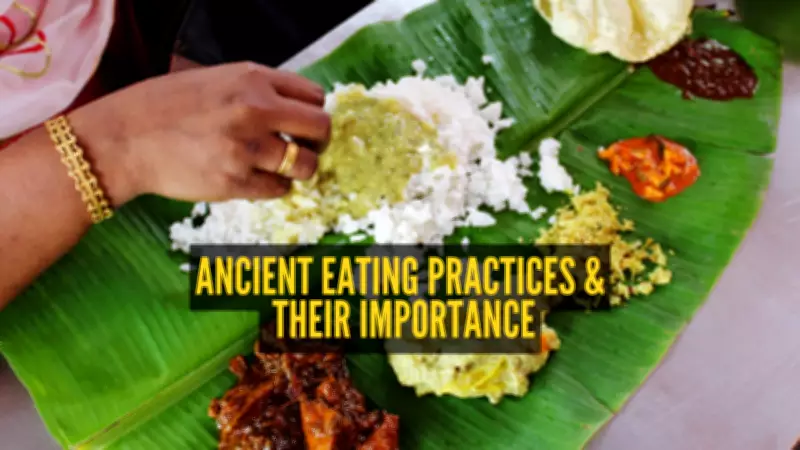
According to legend, ancient yogis used their palms as a natural measuring tool to determine the appropriate amount of food to consume. It is believed that one should only eat the quantity of food that can be held in one's palm. This method ensures nourishment without overloading the digestive system. In traditional times, yogis often ate without utensils, using their palms to hold food, which naturally limited their intake.

Experts suggest that the stomach's capacity is roughly equivalent to the size of your palms. By following this practice, you can avoid overeating and promote better digestion, aligning with the yogic principle of moderation and mindfulness in consumption.
Sitting Cross-Legged on the Floor and Checking the Right Nostril
In Ayurveda, sitting cross-legged on the floor while eating is recommended to limit food intake and enhance digestion. This posture encourages a more mindful and relaxed eating experience. Additionally, it is advised to check if your right nostril is active before eating. The right nostril is associated with the Surya Nadi, which governs the body's heat and the navel region—crucial for cooking and digesting food internally.
If your right nostril is not active, a simple technique can help: take your right hand, press it under your left armpit, close your eyes, and consciously focus on breathing through the right nostril for a few seconds. This practice can help open the nostril naturally, allowing you to proceed with your meal in a balanced state.
Chanting the Bhojan Mantra
Offering food to the Gods before consumption is a practice that transforms it into Prasadam, infusing it with spiritual significance and setting a positive intention. Food eaten in haste, stress, or anger is less likely to be digested properly. By offering food to God, it becomes Satvik—pure and harmonious—and you add the purity of your heart to it.
While offering, chant the bhojan mantra: "Brahmārpaṇaṁ Brahma haviḥ Brahmāgnau Brahmaṇā hutam. Brahmaiva tena gantavyaṁ Brahmakarmasamādhinā." In English, this means that the act of offering, the food itself, the fire that digests it, and the offerer are all Brahman (the divine). By perceiving everything as divine, one moves closer to spiritual realization, enhancing the meal's nourishing effects.
Sitting in Vajrasan After Eating
Ayurveda clearly highlights the benefits of sitting in Vajrasan (thunderbolt pose) after finishing a meal. This posture acts as a magic tool to aid digestion, reinforcing the idea that you are what you digest. By assuming Vajrasan, you help your body process food more efficiently, reducing discomfort and promoting overall gut health.
Incorporating these ancient yogic eating habits into your daily routine can lead to significant improvements in digestion, mindfulness, and overall wellness. As we navigate modern life, revisiting these time-tested practices offers a pathway to a healthier, more balanced existence.






