Complications Define Surgical Greatness
Complications are an inescapable reality of surgical practice. Every surgeon, no matter how skilled, will face them at some point in his or her career. What separates a good surgeon from a great surgeon is not the absence of complications, but the speed and clarity with which these are handled. A story from my residency at the Postgraduate Institute of Medical Education and Research (PGI), Chandigarh, in 1981 illustrates this point remarkably well.
The Gallbladder Surgery Incident
A friend of mine had arranged for his sister to undergo gallbladder removal at the hospital. The procedure was carried out by a senior consultant and went smoothly. In that era, such operations were performed through open surgery — laparoscopy was still years away. By afternoon, the patient had been moved to the ward and appeared to be recovering normally.
By five o'clock that evening, my friend knocked on my door with alarming news: his sister's blood pressure was falling. It was a Saturday evening and senior residents looking after the patient were watching a movie at Bhargava auditorium. A message was flashed on screen, and within minutes they were at the patient's bedside. The situation was serious enough to summon the consultant who was at home. He arrived within fifteen minutes. On examination, the blood pressure was only marginally low, and he recommended a short period of observation. But even as he stood there, it plunged to 70 mm — the patient was going into shock.

Swift Action Saves a Life
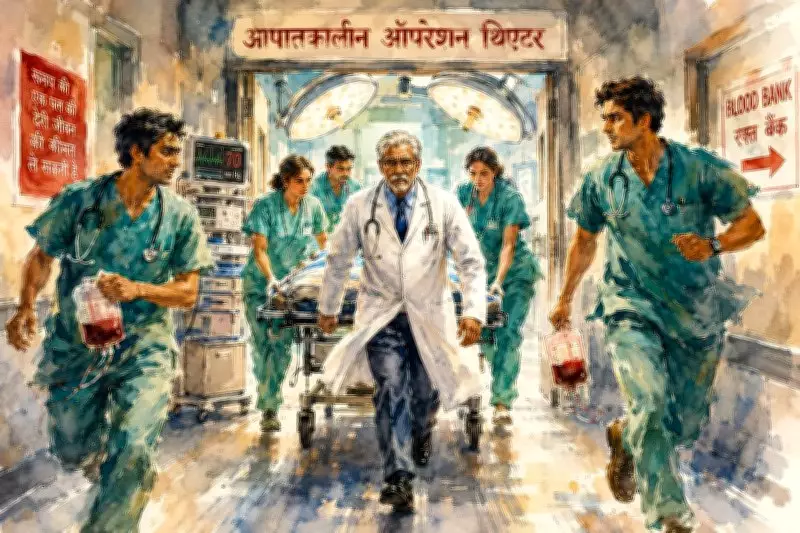
He acted without losing any time. The patient was rushed to the emergency operation theatre within five minutes. My colleague and I were instructed to rush to the blood bank to arrange blood. When a delay arose in releasing the units, the consultant walked over himself and personally secured their immediate release. The blood was issued at once. Roughly 45 minutes after the operation began, the consultant stepped out of the theatre, composed and calm. He explained that the patient had been bleeding from the gallbladder bed, with nearly two litres of blood pooled in the abdominal cavity. The source had been found and controlled.
The patient recovered without further incident and was discharged a few days later.
Four Decades of Lessons
This episode has stayed with me for more than four decades now. It emphasises that surgical excellence extends well beyond technical skill in the operating room. Vigilance, rapid judgment, coordinated teamwork, and the willingness to act decisively — these are what save lives when things go wrong. On that evening, every one of those qualities was on display.
The episode also highlighted the extraordinary dedication of the doctors at the PGI, Chandigarh. Despite it being a Saturday evening, the response was immediate. The consultant's hands-on involvement at every stage, including his personal visit to the blood bank, spoke volumes about the culture of care that defines this premier medical institution. It left an impression I have never forgotten.