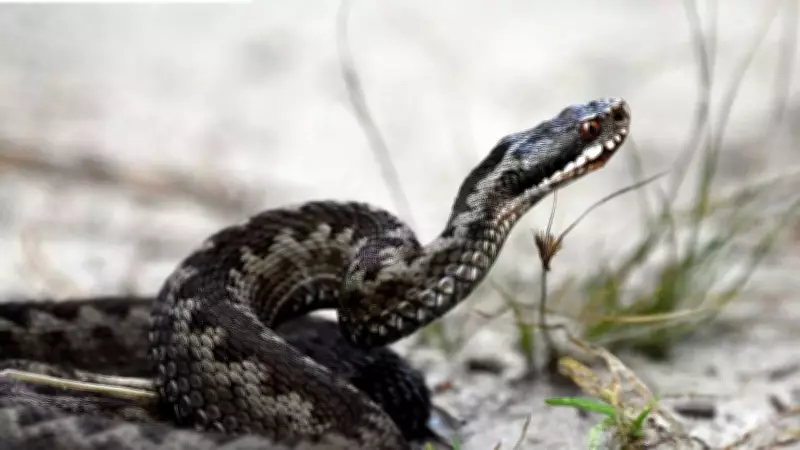
Viper Strike Speed Study: Why Humans Can't React to Snake Attacks
When a viper strikes, the moment is over before your brain can even process what happened. According to groundbreaking research published in the Journal of Experimental Biology, these venomous snakes operate on a biological timescale that completely outpaces human perception and movement capabilities.
The Blinding Speed of Viper Strikes
The 2025 study titled 'Kinematics of Strikes in Venomous Snakes' utilized high-speed cameras capable of capturing thousands of frames per second to analyze snake attacks in unprecedented detail. Researchers discovered that full viper strikes—including head launch, fang contact, venom delivery, and withdrawal—typically finish in under 70 milliseconds, with some attacks clocking in as fast as 40 milliseconds.
This extraordinary speed is made possible by the viper's unique anatomical adaptations. Their highly flexible neck vertebrae allow for rapid head projection, while specialized muscles and tendons store elastic energy that releases in sudden bursts rather than gradual pushes.

Human Reaction Times: A Biological Limitation
In stark contrast, the average human visual reaction time falls between 200 and 250 milliseconds under ideal conditions. Even our fastest responses—spinal reflexes—typically require 50 to 70 milliseconds to activate. This means that by the time your brain registers movement and sends signals to your muscles, a viper's strike has already concluded.
Specialists emphasize that this gap has nothing to do with panic or poor reflexes. Instead, it represents a fundamental limitation of the human nervous system. The biological chain of human reactions simply cannot compete with the pre-programmed, lightning-fast attack sequence of vipers.
Comparative Research Across Species
The comprehensive study examined strike performance across more than 30 snake species, with particular focus on vipers. Results consistently showed strike durations ranging from approximately 40 to 90 milliseconds, varying based on temperature, species, and specific situations.
Once initiated, these strikes follow a predetermined trajectory that cannot be adjusted mid-motion. Vipers preload their muscles before any visible movement occurs, essentially bypassing the reaction time comparison entirely.
Why Avoidance Matters More Than Reaction
This research provides crucial insights for snake safety. Experts now stress that avoidance strategies are far more effective than attempting to react to an attack. Since human reflexes cannot match viper strike speeds, prevention through awareness and distance becomes paramount.
The study's findings highlight how evolution has equipped vipers with specialized hunting mechanisms that exploit the limitations of potential prey, including humans. Their combination of speed, anatomical adaptations, and effective venom delivery creates a nearly unstoppable attack sequence.
As researchers continue to analyze these remarkable predators, one thing remains clear: when it comes to viper encounters, your best defense is never being within striking distance in the first place.