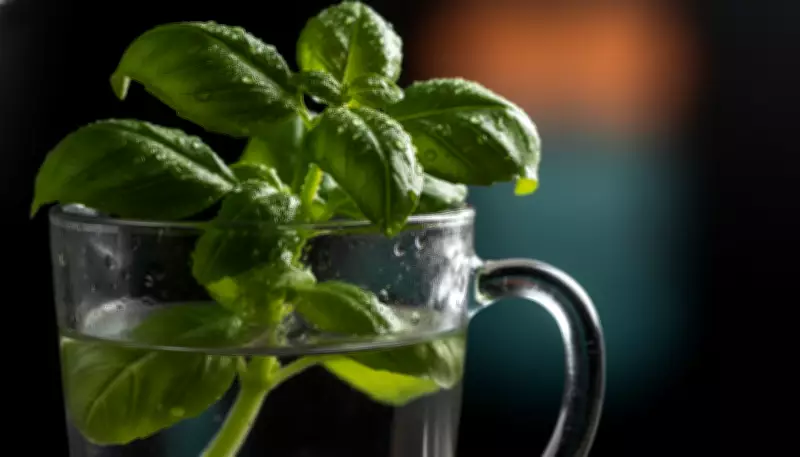
Let us be honest: most of us have killed a basil plant at least once. You purchase it at the grocery store, place it on your windowsill with the best intentions, and within a week, it is drooping, yellowing, or simply gone. If this sounds familiar, there is nothing wrong with you; you simply have not been given the correct information. The best part is that you do not need a green thumb to keep basil alive indoors. It requires only two surprisingly simple habits.
The Double Pot Trick You Did Not Know You Needed
The truth is that supermarket basil was never really meant to thrive in your kitchen. Those small pots are cramped, the roots are bound and stressed, and by the time the plant reaches your counter, it is barely hanging on. Watering directly often worsens the situation, either drowning the roots or leaving dry patches that quietly kill the plant from below.
The Double Pot Water Mug method is a low-effort fix for indoor herb growers. The idea is simple: take the pot your basil came in, nestle it inside a larger container such as a mug, a bowl, or anything without drainage holes, and add a shallow layer of water to the outer container. That is all it takes. Research published in Subirrigation: Historical Overview, Challenges, and Future Prospects confirms that this method of drawing water up through the soil from below results in more uniform root-zone moisture and reduces the risk of foliar disease compared with overhead watering. The soil remains evenly moist, the risk of root rot is minimized, and you do not have to check the soil every day obsessively.

One Daily Pinch
Once your watering situation is sorted, there is one more habit worth building: pinch your basil every single day. It may seem too small to matter, but there is real science behind it. Basil is a member of the Lamiaceae family, which also includes mint, rosemary, patchouli, and lavender. Each plant in this family has a trait known as apical dominance, where the uppermost growing tip suppresses side shoots. The moment you pinch it off, the plant stops sending energy upward and redirects it outward into lateral branches and new growth. The result is a bushier, fuller plant with many more leaves to harvest, rather than the tall, leggy version most of us end up with. A study on patchouli published in the Journal of Horticultural Sciences states that this is one of the most effective ways to boost both the quantity and the aromatic quality of the leaf across the family.
More importantly, daily pinching delays flowering. Once basil starts flowering, the leaves turn bitter and lose their flavor almost immediately because the plant shifts its energy toward producing seeds rather than the aromatic oils that give basil its smell and taste. Snipping those tiny buds before they open keeps your plant in leaf-production mode for significantly longer.
Getting the Light Right
Even with perfect watering and daily pinching, basil will not thrive in the wrong spot. It requires bright, indirect light; a south- or west-facing window is usually ideal. If your leaves are turning pale, the plant needs more light. If the edges are becoming crispy, it is getting too much direct sun. During the winter months, a small grow light can bridge the gap when natural light becomes scarce.
Why This Actually Matters
Beyond the obvious perk of having fresh basil on hand whenever you need it, there is a real sustainability angle here. Every supermarket herb comes in plastic, and most of us throw the plant away after a week or two. The double-pot method and daily pinching together can extend a single basil plant's lifespan from days to months, reducing plastic waste and repeat purchases.
For millennials and young adults who are increasingly thinking about sustainability in everyday choices, homegrown herbs are a surprisingly easy, low-cost entry point. You do not need a garden, a backyard, or even a balcony. A sunny window, a mug you already own, and a minute of daily attention are genuinely all it takes. Basil is not a fussy plant. It just needs someone who knows what it actually needs, and now you do.