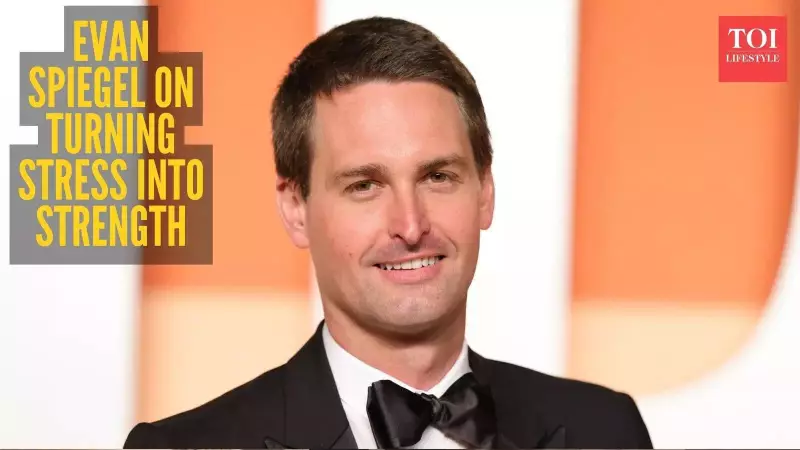
For most people, daily stress from work, finances, or personal life feels like an enemy to be battled. However, Snapchat's top executive offers a radically different and refreshing viewpoint that turns this common notion on its head.
Stress as a Gift: The Spiegel Mindset Shift
Evan Spiegel, the co-founder and CEO of Snap Inc., has led the company for over a decade, navigating intense challenges including the historic decision to reject a multi-billion dollar acquisition offer from Facebook in 2013. On the Grit podcast, he revealed his unconventional philosophy. Instead of viewing stress as a threat, Spiegel consciously reframes it as "a gift"—a valuable opportunity for personal learning and growth.
He argues that the pivotal change begins in the mind. When you stop panicking and start seeing stressful situations as an integral part of your development process, they begin to lose their overwhelming power. This perspective is not merely motivational talk. Spiegel cited research, including Stanford expert Kelly McGonigal's book 'The Upside of Stress', which substantiates that altering your interpretation of stress can dramatically improve your performance and coping ability.

Beyond Positive Thinking: Practical Routines for Resilience
Spiegel is quick to clarify that a positive mindset alone is not a magical cure. It must be paired with actionable habits to release physical and mental pressure. His personal toolkit includes regular exercise, sauna sessions, and meditation. These disciplined routines help him process stress internally, preventing it from accumulating throughout the day and allowing him to maintain balance.
A crucial part of his approach involves taking responsibility for his own emotional state. He is deeply mindful of not transferring his stress onto his team at Snap or his family. Spiegel believes it is his duty to absorb and manage the pressure, ensuring it does not spill over and negatively impact his colleagues or loved ones.
Normalising Pressure: The Long-Term Effect of Experience
After years at the helm of a fast-paced tech giant, Spiegel notes that high-pressure situations have started to feel normal. Constant exposure has helped him develop a rhythm where stressful moments are no longer perceived as emergencies but as standard components of his leadership role. The fear subsides, replaced by a learned capacity to navigate challenges.
His distilled advice is both simple and profound: do not run from or fear stress, and never take it out on others. The strategy involves learning from the pressure, building consistent coping routines, and allowing experience to build your resilience over time. This holistic method—combining cognitive reframing with physical and mental practices—offers a sustainable path for managing the inevitable stresses of modern life.