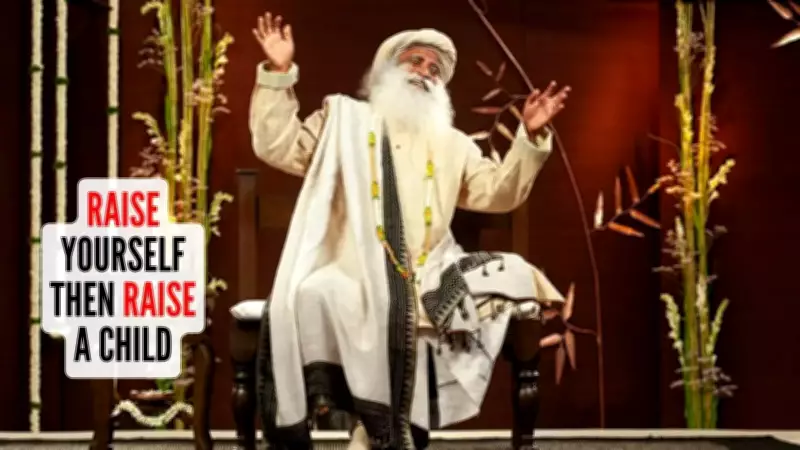
Sadhguru's Revolutionary Parenting Insight: It's About You, Not Your Child
In today's society, parenting has subtly evolved into a silent, often unspoken competition. Many parents eagerly proclaim their children as bright, kind, or uniquely special, wearing these labels like badges of honor. However, the renowned spiritual teacher Sadhguru fundamentally challenges this pervasive mindset at its very core. He asserts that the primary focus should not revolve around whether children are perceived as wonderful. Instead, the real, transformative question is whether parents are actively striving to become wonderful human beings themselves.
This profound shift in perspective might sound deceptively simple, yet it has the power to radically alter everything about family life. It moves the essence of parenting away from pride and superficial validation toward genuine responsibility and emotional maturity. It calls upon adults to embark on a journey of personal growth and self-awareness before expecting children to exhibit perfect behavior. Here is a deeper exploration of what this invaluable advice truly signifies and the practical lessons families can glean from it.
Parenting Is a Responsibility, Not a Trophy to Display
Sadhguru eloquently speaks about how parents often project their own ego onto their children. When adults repeatedly state, "My child is amazing," it can sometimes conceal a deeper, unacknowledged need for personal validation. In such scenarios, a child's success becomes erroneously viewed as proof of effective parenting, turning achievements into mere reflections of adult self-worth.

But children are not medals to be displayed or trophies to boast about. They are independent lives with their own paths and potentials. Sadhguru's message is unequivocally clear: stop attempting to prove that children are special. Instead, dedicate energy to building a home environment where children feel genuinely safe, respected, and free to explore and grow. When parents chase social status or external approval, children inevitably feel undue pressure. Conversely, when parents prioritize their own self-growth and inner development, children naturally feel supported and nurtured.
The next generation can only truly improve and thrive when adults commit to improving themselves first, setting a foundation of emotional stability and conscious living.
Children Learn Through Observation, Not Lectures
According to Sadhguru, children absorb life lessons primarily through keen observation of daily behaviors, not from didactic lectures or instructions. They do not internalize values from spoken words alone; they learn from the consistent actions and reactions they witness. If a parent preaches about patience but frequently reacts with anger or frustration, the intended lesson is entirely lost. Similarly, if a parent advocates for honesty but casually bends rules or engages in deceit, children will inevitably notice and emulate these contradictions.
Sadhguru reminds us that children are not empty vessels waiting to be filled with parental ideals. They are dynamic lives unfolding in real-time. The essential role of a parent is to cultivate the right atmosphere—one of calm, security, and authenticity. Calm and composed parents tend to raise calmer children. Secure and self-assured parents foster a sense of security in their offspring. While this principle sounds obvious, it demands deep, consistent inner work and self-reflection from adults.
Eliminate Labels of "Good" or "Bad" Children
In numerous discussions, Sadhguru has pointed out that labeling children—whether as "brilliant" or "difficult"—creates unnecessary psychological weight and confines them to rigid boxes. Children evolve and change rapidly; their behavior is often a reflection of their environment, current mood, and developmental stage, not a fixed identity.
Instead of habitually asking, "Is my child good?" parents can pivot to a more constructive question: "Am I creating clarity and harmony at home?" This small yet powerful shift removes the toxic element of comparison and fosters deeper connection. When children are not constantly judged or categorized, they gain the confidence to explore their true selves and potentials freely.

Foster Freedom with Awareness, Not Control with Fear
Sadhguru does not advocate for strict, authoritarian control in parenting. He emphasizes raising conscious, aware human beings. In multiple parenting discussions, he has noted that overprotection can weaken a child's innate intelligence and problem-solving abilities. When every decision is made for them, children never learn to navigate consequences or develop resilience.
At the same time, granting total freedom without any guidance can lead to confusion and lack of direction. The ideal balance lies in cultivating awareness. Parents should take the time to explain why certain boundaries or rules exist. Rather than resorting to the dismissive "Because I said so," providing clear reasons builds trust and enhances critical thinking skills. A child who is merely controlled may obey out of fear, but a child who understands the rationale behind actions becomes conscious and responsible.
Your Inner Well-Being Shapes the Home Environment
Sadhguru places significant emphasis on inner well-being and emotional stability. He firmly believes that a stressed, anxious parent cannot effectively raise a relaxed, secure child. Modern parenting is fraught with pressures—school competitions, screen addiction, social comparisons, and career anxieties all weigh heavily on family dynamics.
However, children do not require perfect parents; they need emotionally stable and present ones. When adults actively manage their anger, handle stress constructively, and prioritize their own mental health, the overall energy of the household transforms. A peaceful home is not constructed through rigid discipline alone; it is built by emotionally balanced adults who model resilience and calm. This is why Sadhguru insists that authentic parenting must begin with self-transformation and inner work.
Raise Emotionally Healthy Human Beings, Not Mere Achievers
Many contemporary parents measure success narrowly through academic marks, medals, and societal milestones. Sadhguru questions this limited conception of achievement, advocating for a broader, more holistic view. He has frequently stated that education should enhance intelligence and curiosity, not fuel anxiety and fear. A child who matures into a joyful, compassionate, and responsible adult has succeeded in life, regardless of external fame or accolades.
Parents who constantly compare their children with others inadvertently foster insecurity and self-doubt. In contrast, parents who nurture curiosity, creativity, and emotional intelligence cultivate resilience and inner strength. The world does not solely need academic toppers; it desperately needs emotionally healthy, conscious individuals. And this foundational development begins unequivocally at home, within the family unit.
The Core Lesson for Parents
The most potent message from Sadhguru's parenting advice is strikingly simple: cease the futile endeavor of trying to produce perfect children. Direct that energy toward working on becoming mature, stable, and aware adults yourselves. Children do not need parents brimming with pride over external achievements; they need parents who are emotionally present and engaged. They do not require constant praise or validation; they need guidance offered without ego or ulterior motives.
The next generation will only genuinely improve and evolve when this current generation commits to becoming more conscious, self-aware, and emotionally intelligent. There are no shortcuts or quick fixes in this transformative journey.
Disclaimer: This article is based on publicly available talks and teachings of Sadhguru. It is intended solely for informational and reflective purposes. Parenting approaches vary widely across cultures and individual families. Readers are encouraged to apply these ideas thoughtfully, aligning them with their personal values and unique circumstances.