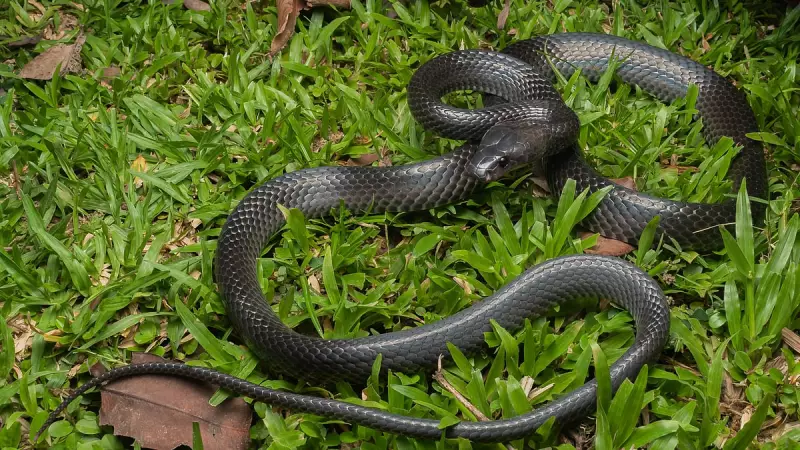
In a significant boost for Indian herpetology, a team of scientists has unveiled a previously unknown species of wolf snake from the dense forests of Great Nicobar Island.
The Discovery Team and Location
The groundbreaking discovery was the result of collaborative work by researchers R S Naveen and S R Chandramouli from Pondicherry University, alongside Zeeshan A Mirza, a biologist at Germany's Max Planck Institute for Biology in Tübingen. Pune-based wildlife photographer Girish Choure also played a crucial role in the team. Their collective efforts led to the identification of the snake, which has been named Lycodon nicobariensis, in the biodiverse haven of Great Nicobar.
Significance of the Find
The identification of a new species in the 21st century underscores the vast, untapped biological wealth of the Andaman and Nicobar archipelago. This discovery emphasizes that even well-known ecosystems can harbor secrets waiting to be uncovered. The new wolf snake, a non-venomous colubrid, adds a unique branch to the evolutionary tree of Indian reptiles and highlights the critical importance of continued wildlife exploration and habitat conservation.

This find serves as a powerful reminder of the fragile and unique ecosystems found in remote parts of India. It calls for enhanced conservation strategies to protect these habitats from potential threats, ensuring that such endemic species can thrive for generations to come.