

Four Nepali Nationals Successfully Repatriated from Indian Mental Health Facilities
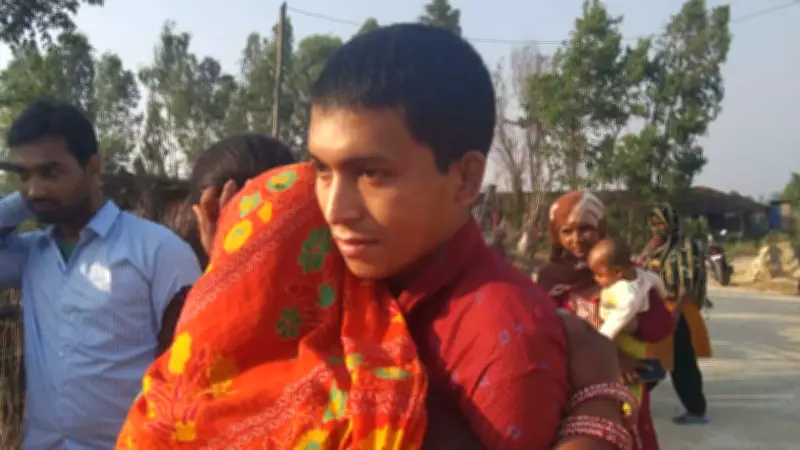
In a significant cross-border humanitarian effort, four Nepali nationals who had been institutionalized for years in Indian mental health facilities have finally been repatriated to their homes in Nepal. This complex operation involved two individuals being escorted back by dedicated social workers, while two others were reunited after their families successfully traced and retrieved them from the institutions.
Years of Institutionalization Despite Clinical Stability
The individuals had been admitted to various government facilities including Lumbini Park Mental Hospital, Berhampore Mental Hospital, and Calcutta Pavlov Hospital through police and court orders. Medical assessments confirmed they were clinically stable, yet they remained confined within these institutions for prolonged periods. This extended institutionalization resulted primarily from critical systemic failures including the absence of proper identity verification mechanisms, insufficient cross-border coordination between Indian and Nepali authorities, and no established repatriation protocols.
NGO Anjali Facilitates Complex Repatriation Process
The successful repatriation was facilitated through collaboration between hospital authorities, local communities in Nepal, and Anjali, a Kolkata-based mental health non-governmental organization. The process required meticulous planning and execution across international borders.

For two of the individuals, Anjali's social workers personally accompanied them across the India-Nepal border and ensured their safe reintegration into families located in remote districts of Mahottari and Dhanusha. This aspect of the operation involved intensive home tracing efforts that included locating specific villages, verifying identities through multiple channels, and rebuilding contact with families who had, in some heartbreaking cases, presumed their relatives deceased after years of separation.
Families Travel to India to Retrieve Relatives
For the remaining two individuals, the home tracing efforts enabled their families to travel to India and personally take their relatives back from the hospitals. This process was not without challenges, as initial resistance and suspicion from both communities and families had to be carefully addressed through sustained engagement, thorough verification processes, and sensitive local mediation.
"These are not isolated cases," emphasized a member of the Anjali team. "People remain in hospitals not because they need treatment, but because systems fail to connect them back to where they belong."
Systemic Failures and Administrative Containment
All four individuals entered the institutional system through legal or police routes. Once admitted, they became administratively contained within the healthcare bureaucracy. Without clear identity documents or proper coordination between authorities across borders, their discharge was delayed indefinitely, creating what seemed like permanent institutionalization.
A Replicable Pathway for Future Repatriations
The recent successful repatriations demonstrate that such situations are not inevitable outcomes. With coordinated action between hospitals, civil society organizations, and communities, individuals can be safely and promptly returned to their homes and families.
Equally critical to the process is post-return follow-up. The NGO continues to maintain contact with families and communities to support reintegration efforts and monitor well-being—an element often missing in standard discharge processes that can lead to relapse or re-institutionalization.
The initiative offers a clear, replicable pathway for similar cases: systematic home tracing, cross-border coordination, community engagement, and sustained follow-up. Without such dedicated efforts, many more individuals risk remaining in institutions indefinitely—not due to illness or medical necessity, but due to systemic complexity and bureaucratic inertia.
These four successful returns suggest that the problem of cross-border institutionalization is not an impossibility to solve. Rather, it is often a matter of inaction that can be overcome through determined, coordinated humanitarian efforts.






