Have you ever stopped to wonder how animals manage to eat their meals without the teeth that humans rely on so heavily? From birds in our backyards to snails in our gardens, evolution has crafted some remarkably creative solutions for biting, scraping, and slicing food.
The Toothless Truth About Hens and Chickens
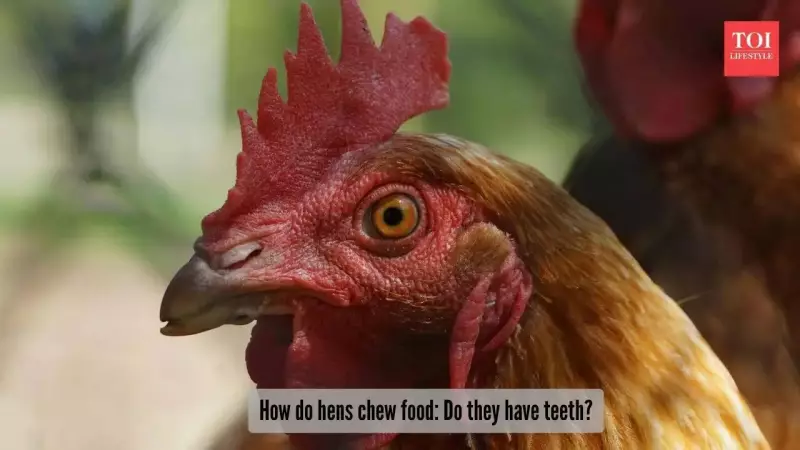
Many people are curious about whether hens and chickens possess teeth. The straightforward answer is that hens and most modern birds do not have teeth. However, their story begins millions of years ago. Their ancestors, the dinosaurs, did have teeth, as did early bird species. Around 100 million years ago, birds made an evolutionary trade, ditching heavy teeth for lightweight, tough, and horny beaks.
As Stuart Blackman from BBC Science Focus clarifies, the absence of teeth in hens today does not mean the potential is gone forever. He famously noted that avian dentition is "as rare as proverbial hen’s teeth." Evolution did not completely erase the blueprint; birds still carry the genetic code for teeth deep within their DNA.

How Birds Chew Without Teeth
So, how do birds process their food without teeth? Their beaks are excellent tools for pecking, tearing, and grabbing, but they are not well-suited for chewing or grinding. This is where a specialized organ comes into play: the gizzard. The gizzard is a muscular part of the gut that often contains small stones or grit swallowed by the bird. These stones help to pulverize and crush the food, performing the job of mammalian molars.
Some birds have evolved even more tooth-like features. For instance, goosanders, a type of sawbill duck, have developed serrated edges on their bills to grip slippery fish. Similarly, birds like flamingos, geese, and penguins have evolved barbs on their tongues or in their throats to help trap and swallow prey.
Snails and Slugs: The Owners of Thousands of Teeth
Moving from the sky to the ground, snails and slugs present another fascinating case. These garden pests do not have teeth in the conventional sense, but they possess something even more extraordinary. They have a unique organ called a radula.
According to Britannica, the radula is a "horny, ribbonlike structure" that is covered with thousands of microscopic teeth, known as denticles. This chitinous, tongue-like organ acts like sandpaper, rasping away at food. It is used for scraping algae, shredding leaves, and in the case of predatory snails, even drilling into prey or harpooning them.
The radula is a non-stop tooth factory. New teeth are constantly being produced to replace old, worn-out ones. The structure is supported by an odontophore, a cartilage that allows for precise movement. Different species have different radula formulas; for example, the taenioglossan type features seven teeth per row, functioning like a tiny rake for collecting algae.
And The Mammal With The Most Teeth Is...
While birds have forgone teeth and snails have thousands, which mammal holds the record for the highest tooth count? The winner is the giant armadillo. This remarkable creature boasts up to 100 chisel-like teeth, which it uses to grind through its diet of insects and tough plants. Unlike human teeth, these are simple pegs without enamel, perfectly adapted to its feeding needs. This far surpasses its relative, the common armadillo, which has only about 48 teeth.
From the gizzard of a hen to the radula of a snail and the numerous pegs of a giant armadillo, the animal kingdom is full of ingenious evolutionary adaptations for eating. These solutions prove that when it comes to survival, nature always finds a way, with or without the teeth we take for granted.