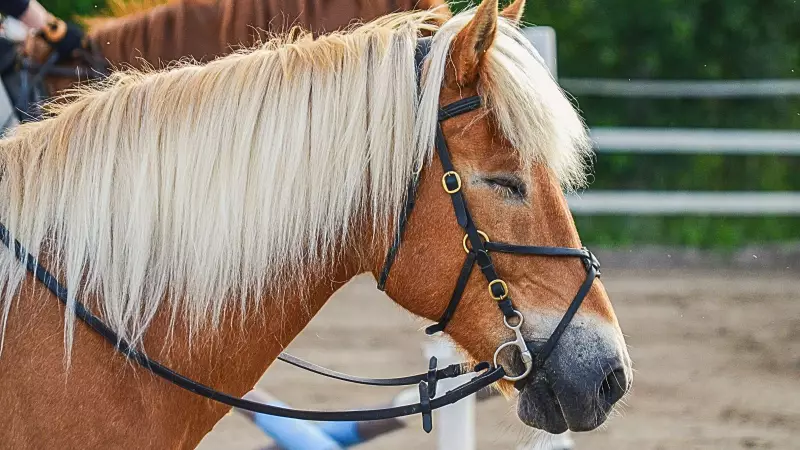
Have you ever watched a horse dozing in a field, eyes half-closed, yet firmly upright? This common sight hides a remarkable evolutionary adaptation that has ensured the survival of these majestic animals for millennia. Contrary to human habits, horses are masters of the power nap while standing, a behaviour rooted in their history as prey.
The Prey Animal's Survival Tactic
In the wild, horses are constantly on the menu for predators. For them, alertness is not a luxury but a necessity for survival. The act of lying down makes them vulnerable, as rising quickly is a slow and cumbersome process for their large bodies. As noted by Encyclopaedia Britannica, "Getting up quickly is hard for a horse; standing sleep helps them avoid becoming an easy target." This instinct to remain on their feet allows them to detect danger and bolt immediately, saving precious seconds that could mean the difference between life and death.
Nature's Locking Mechanism: The Stay Apparatus
So, how do horses manage to sleep without collapsing? The answer lies in a specialised biomechanical system known as the "stay apparatus." This ingenious arrangement of tendons and ligaments acts like a biological locking mechanism in their legs. It essentially allows their major joints, particularly in the front legs and one hind leg, to lock into position with minimal muscular effort.
Think of it as a built-in kickstand. The front legs stabilise passively, while a unique adaptation in the hind legs allows the kneecap to hook over a bony ridge, clicking the leg into a stable, straight position. This setup is incredibly energy-efficient, enabling horses to rest their minds and bodies while remaining ready to move at a moment's notice.
Deep Sleep and Herd Safety
While standing naps are crucial, they do not provide the deep, restorative REM (Rapid Eye Movement) sleep essential for brain function. For this, horses must lie down. However, they do so sparingly and only when they feel secure. On average, adult horses lie down for only about 30 minutes to 2 hours per day, accumulating their total daily sleep in short bursts that sum to roughly 2.5 to 5 hours.
This behaviour is deeply social. In wild herds, horses practise a coordinated watch system. While one or a few individuals lie down for deep sleep, others stand guard. This collective vigilance ensures the safety of the entire group. Even in domestic settings like stables, this instinct persists, with one horse often seen lying down while its companions remain standing.
Health Implications and Foal Behaviour
Interestingly, the habit of sleeping upright is not just about predator evasion; it's also better for their physiology. Lying down for extended periods can put excessive pressure on a horse's internal organs, muscles, and nerves, potentially leading to circulatory issues or even temporary limb paralysis.
Baby horses, or foals, are the exception to the standing rule. They lie down much more frequently, requiring more deep sleep for their rapid growth and development. As they mature, they gradually adopt the adult pattern, relying more on the safety of the standing nap honed by evolution.
This fascinating sleep strategy, powered by the stay apparatus, is a perfect example of how evolution shapes behaviour. It is a testament to the horse's journey as a species that thrived not by brute force, but through smart, energy-conscious adaptations that prioritise vigilance and survival.