Ancient Four-Eyed Fish Fossils Rewrite Vertebrate Vision Evolution
Fossils possess a remarkable ability to reshape our understanding of family trees, unveiling creatures that appear both alien and strangely familiar, akin to distant relatives we never realized existed. Approximately half a billion years ago, during the Cambrian explosion, Earth's oceans teemed with experimental life forms as evolution tested countless designs to determine which would endure.
Discovery of Four-Eyed Ancestors in China
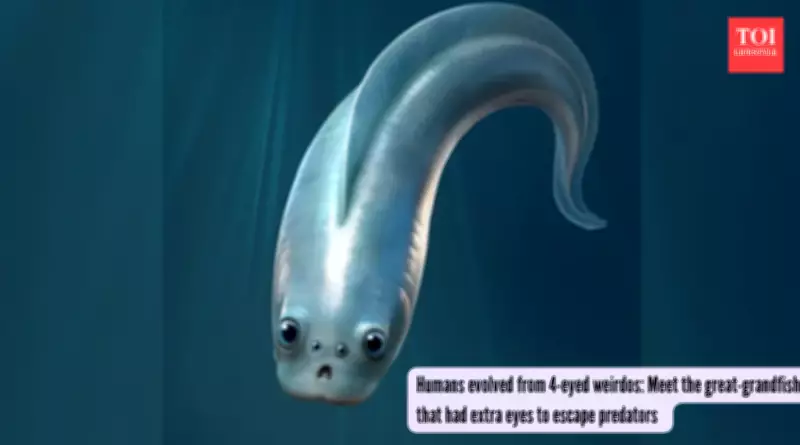
Rare fossils unearthed from the Chengjiang beds in China, dating back 518 million years to the Cambrian period, depict our earliest vertebrate relatives as jawless fish known as myllokunmingids. These ancient organisms possessed four eyes: two larger ones positioned on the sides of the head and two smaller, centrally located eyes on top, all capable of forming images similar to camera lenses.
Species such as Haikouichthys ercaicunensis and an unnamed myllokunmingid exhibit these features in exceptional detail, despite the rarity of soft eye tissue fossilizing. This finding fundamentally alters perspectives on early vertebrate evolution, indicating that our ancestors were visually sophisticated animals navigating perilous environments.

Why Did These Creatures Have Four Eyes?
During the Cambrian era, oceans became increasingly hazardous with the emergence of large predators, placing immense pressure on small, soft-bodied swimmers. Having four eyes likely provided these animals with a broader field of view, crucial for detecting and evading threats. As explained by study co-author Jakob Vinther, an associate professor at the University of Bristol, these noodle-thin, vulnerable ancestors utilized extra peepers for panoramic vision amidst chaotic surroundings.
Scientific Analysis and Key Observations
Led by Peiyun Cong of Yunnan University, researchers employed microscopes and chemical tests to identify melanosomes, light-absorbing pigments, and lenses in all four eyes. The discovery of two smaller, fully functional eyes between the larger ones was entirely unexpected and thrilling, according to Cong. These central eyes are linked to a "third eye" feature observed in some modern vertebrates, such as the light-sensing parietal eye in lizards, and to the pineal gland in human brains, which regulates sleep through melatonin production.
Cong noted that pineal organs originally functioned as image-forming eyes, only later evolving to shrink, lose visual capabilities, and adopt their contemporary role in sleep regulation.
Implications for Evolutionary Understanding
This research challenges previous notions of simple early eyes, proposing that four-eyed vision was ancestral in vertebrates. Over time, as marine environments stabilized, this complex visual system simplified to the two eyes seen in most modern species. Published in the journal Nature, the study traces our evolutionary lineage back to these resilient survivors, highlighting how adaptive traits shaped vertebrate history.