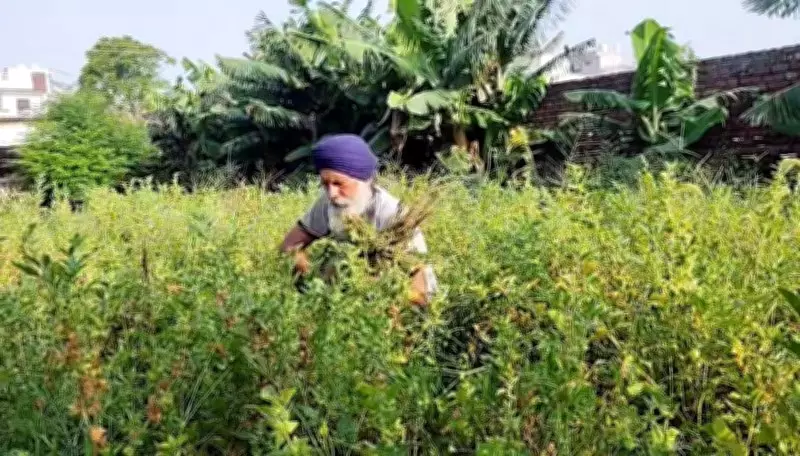
Gurbinder Singh, a former soldier, has transformed his small organic farm into a successful venture called Kisan Hut on Loharka Road in Amritsar, offering a wide range of chemical-free products including wheat, turmeric, millets, and spices. He personally processes his produce, allowing direct consumer sales.
From battlefield to organic fields
After years of serving the nation in the armed forces, Gurbinder Singh returned home with a new mission: to provide families with healthy, chemical-free food. What started as a small effort to grow organic produce for his own family has now blossomed into a thriving enterprise that inspires both consumers and fellow farmers.
A native of Bhagowala village in Gurdaspur, Gurbinder practices agriculture in Gumtala village on the outskirts of Amritsar. Initially, friends and relatives requested his organic produce, leading to growing demand.

Kisan Hut: A direct farm-to-market model
Today, Gurbinder operates Kisan Hut, where he offers organically grown products such as different varieties of wheat, turmeric, millets, fennel, kalonji, sesame, ashwagandha, safed musli, flaxseed, and spices. His unique approach involves personally processing the produce before bringing it to market, enabling consumers to purchase directly from the source.
His commitment to traditional farming extends beyond crops. While many dairy farmers shift to high-yield foreign breeds, Gurbinder rears 15 indigenous cows. He sells milk at Rs 100 per litre and never needs to seek customers; people come directly to his farm. Demand consistently exceeds supply.
Nutritional benefits of indigenous cows
Gurbinder explained, “Indigenous cows produce less milk than Holstein Friesian breeds, but the milk is richer in minerals and offers greater nutritional benefits.” He believes the future of farming lies in innovation and value addition.
“Farmers must adopt new techniques and learn to market their produce. Instead of selling everything in mandis, they should process and package their products. Consumers should also support farmers who are growing healthy food,” he said.
Diverse crops and sustainable practices
At his farm, Gurbinder cultivates five varieties each of wheat and turmeric, along with an impressive assortment of millets, fennel, kalonji, sesame, ashwagandha, safed musli, flaxseed, and several other crops. His efforts demonstrate that sustainable agriculture can be both profitable and beneficial for public health.