

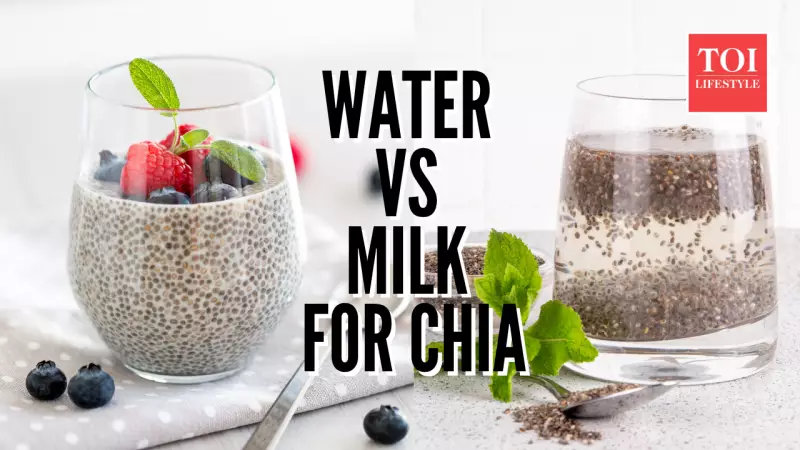
Chia seeds have earned their superfood status, packed with soluble fiber, plant-based omega-3 fatty acids, antioxidants, and essential minerals. However, nutrition experts strongly advise against consuming them dry due to potential throat and stomach discomfort. The real question health-conscious Indians are asking is whether to soak these nutritional powerhouses in water or milk for maximum benefits.
The Science Behind Soaked Chia Seeds
When chia seeds meet liquid, they undergo a remarkable transformation. Studies confirm that hydration significantly increases chia's bioavailability, allowing your body to absorb more nutrients. The soluble fiber forms a viscous gel that acts as a prebiotic, supporting gut health by improving stool consistency and intestinal hydration.
This gel formation also delivers cardiovascular benefits, with research showing reductions in LDL cholesterol and improved glycemic response due to delayed carbohydrate absorption. Most importantly, soaking eliminates the risk of esophageal or gastric expansion that can occur when consuming dry chia seeds.

Water vs Milk: The Nutritional Showdown
The choice between water and milk as a soaking medium significantly influences how your body processes chia seeds. The liquid affects nutrient release speed, digestion rate, and impacts on satiety, blood sugar, and gut function through differences in viscosity and macronutrient composition.
Digestion and Gut Health
For optimal digestive benefits, chia seeds soaked in water create a high-viscosity gel that maximizes fiber's positive effects on gut motility. Research indicates this formulation improves stool consistency, increases water content, and promotes regularity.
When soaked in milk, proteins and fats interact with chia's mucilage, reducing gel viscosity. While this creates a more substantial feeling during digestion due to added macronutrients, water-soaked chia remains superior for gut motility.
Blood Sugar Management
The blood sugar response tells a different story. The high-viscosity gel from water-soaked chia reduces carbohydrate absorption, but chia seeds soaked in milk provide better glycemic stability. The combination of chia fiber with milk's natural proteins and fats creates a synergistic effect that helps maintain steady blood sugar levels.
Weight Management and Hydration
For calorie-conscious individuals seeking pre-meal appetite control, water-soaked chia seeds offer fullness with minimal energy intake. The zero-calorie water base makes this ideal for weight management.
However, those seeking sustained satiety and reduced cravings might prefer milk-soaked chia, where the fiber combines with protein and fat for stronger appetite regulation. For pure hydration efficiency, water remains champion as chia seeds can absorb 10-12 times their weight in plain water, while milk's proteins and fats interfere with maximum water absorption.
Making the Right Choice for Your Health Goals
The ultimate decision depends on your specific wellness objectives. Choose chia seeds soaked in water if you prioritize better digestion, higher hydration efficiency, and low-calorie fullness. This option particularly benefits those focusing on gut health and weight management.
Opt for chia seeds soaked in milk if you seek a balanced, nutrient-rich meal replacement, better blood sugar stability, and longer-lasting satiety. This makes an excellent breakfast option for sustained energy throughout the morning.
Regardless of your preference, nutritionists emphasize consuming chia seeds in moderation as part of a balanced diet. Both soaking methods deliver impressive health benefits, allowing you to customize your approach based on your individual nutritional needs and health goals.






