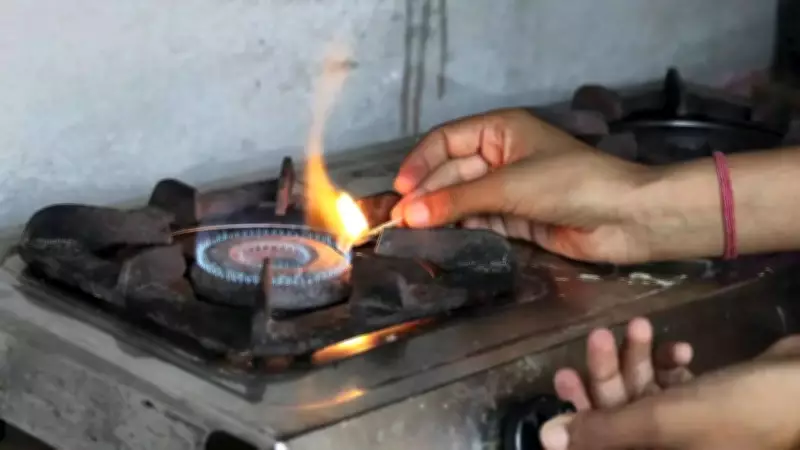
In the village of Faraktewadi in Maharashtra's Kolhapur district, households like that of Sanjay and Suvarna Farakte have found a reliable alternative to LPG and wood-fired stoves. Their home lacks an LPG cooktop, woodfired oven, or induction cooktop, yet they are free from the panic over cooking gas supply that grips much of India amid the West Asia conflict. The source of their peace of mind sits in their own backyard: a domestic biogas unit that promises an uninterrupted supply of cooking fuel.
Biogas as a Sustainable Solution
For the past three years, the Faraktes have used a stove powered by biogas generated from manure, kitchen waste, and even sewage. Their three cubic meter unit is sufficient for a family of five. A pipe runs directly from the digester to their kitchen, delivering gas produced from manure and human waste. Biogas is climate-friendly and does not harm the lungs like traditional chulhas. After extraction, it leaves behind a rich fertilizer. Suvarna Farakte noted, "The supply is steady and clean. I don't cough or have breathing trouble from the smoke generated by its burning."
Community Adoption and Government Support
In Faraktewadi, home to 1,100 residents in Kagal tehsil, nearly 200 households have biogas units. This pattern is replicated across 12 villages in Kolhapur district, where all households possess biogas units. Some who had the facility but stopped using it are now restoring it, realizing that the heat of the West Asia war can impact them too. However, villagers point out that the efficiency of biogas units can drop during monsoon due to cooler temperatures, as decomposing bacteria are less active. Still, the gas generated remains sufficient for cooking, though cowdung cakes are stored as backup.

Since 1982, nearly 1.24 lakh biogas units have been installed in Kolhapur through centrally sponsored schemes, initially under former Prime Minister Indira Gandhi's 20-point programme and now under the Modi government's National Biogas and Organic Manure Programme. Kolhapur alone accounts for nearly 20% of the installation target for Maharashtra's 34 districts under the new programme.
Subsidies and Financial Hurdles
The impetus for biogas adoption has come from central subsidies of Rs 14,350 per unit after installation, with an additional Rs 5,000 per unit from Kolhapur Zilla Parishad (ZP) for cement, brick, and labor costs. However, fewer units were set up last year as targets were achieved in the first four years and the Rs 100 crore grant dried up. ZP authorities are awaiting phase-2 and want the Centre to increase the subsidy amount, which has remained stagnant since 2021. They also urge timely fund release before March each year. A ZP official stated, "No family will set up biogas units without financial assistance. The subsidy is what they want. In recent years, Centre has not released its share. Only if the subsidy is released on time, and is hiked, will more rural households set up biogas units."