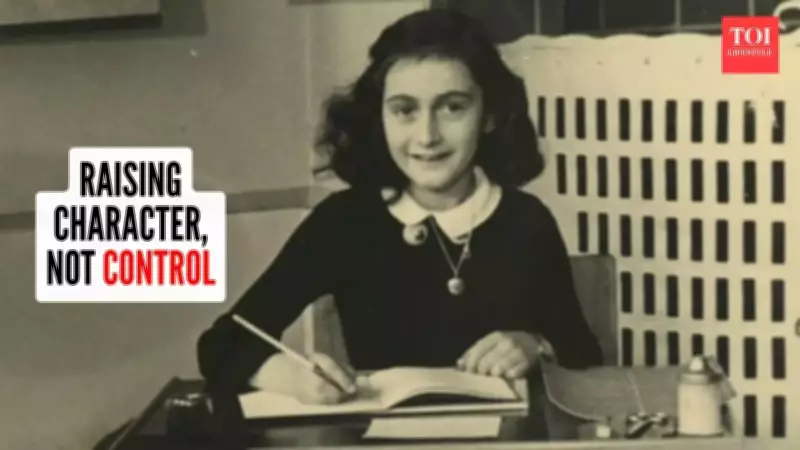
Anne Frank's Enduring Insight on Character Formation
The profound words of Anne Frank, "Parents can only give good advice or put them on the right paths, but the final forming of a person's character lies in their own hands," offer a gentle yet powerful reminder for modern parents. This perspective emphasizes that while parental guidance, values, and daily habits are crucial, a child's character is not a project to be fully shaped by adults. Instead, it evolves organically through personal choices, inevitable mistakes, and meaningful self-reflection. Parenting, therefore, shifts from a role of control to one of direction, inviting parents to rethink their approach as steady guides rather than sculptors.
The Foundation of Trust in Effective Guidance
Advice resonates most deeply when it is built upon a foundation of trust. Children are more receptive to parents they trust, and this trust develops when words consistently align with actions. When a parent demonstrates humility by admitting mistakes, maintains integrity by keeping promises, or shows empathy by listening without immediate judgment, their guidance carries significant weight. Without this bond, even the wisest counsel can sound like mere noise. Anne Frank's quote underscores that advice is an offering, not a command, and its effectiveness hinges on the strength of the relationship behind it.
Modeling Behavior Over Directing Actions
Children learn direction not through forceful pushing but by observing daily life. How conflicts are resolved at home, how elders are treated, and how stress is managed all send powerful signals about values in practice. Pointing out the right path does not mean dragging a child onto it; it involves walking it openly and authentically. When children witness values being lived rather than merely preached, they gain a tangible understanding of what ethical direction looks like in real-world scenarios.

The Private Moments That Define Character
A person's character often forms in small, private moments away from adult supervision. It manifests when a child decides whether to cheat on a test, speak kindly to a peer, or stand up for someone weaker. Parents cannot control these instances, and that is precisely the point of Anne Frank's insight. While parents prepare children for such moments through guidance and example, it is the children themselves who choose who they become within them, highlighting the intrinsic role of personal agency in character development.
Learning Through Natural Consequences
Constant correction can inadvertently weaken a child's sense of responsibility, whereas natural consequences, handled with care, foster judgment and ownership. When children experience the results of their choices, they learn accountability in a meaningful way. This approach does not imply abandoning guidance but rather stepping back at appropriate times to allow space for learning. By respecting a child's growing independence and inner compass, parents encourage resilience and self-reliance.
Balancing Freedom with Core Values
Character is not shaped solely by rules but by internalized values. When parents explain the importance of effort, kindness, and honesty, children learn to uphold these principles even outside parental supervision. Granting freedom within the framework of clear values allows children to practice decision-making, fostering integrity over fear-based obedience. This practice builds inner strength over time, equipping children to navigate life's complexities with moral clarity.
Embracing Change and Individuality in Growth
Parents' expectations may not always align with their children's evolving beliefs, interests, and personalities, which can develop in unexpected ways. This divergence is not a failure but a natural aspect of growth. Anne Frank's words remind us that each person's character is unique, and by accepting this reality, parents can support development without attempting to control the outcome. Encouraging individuality while maintaining a supportive presence allows children to flourish authentically.
Disclaimer: This article is for general informational purposes only. It does not replace professional parenting, psychological, or medical advice. Each child and family situation is unique, and guidance should be adapted accordingly.