

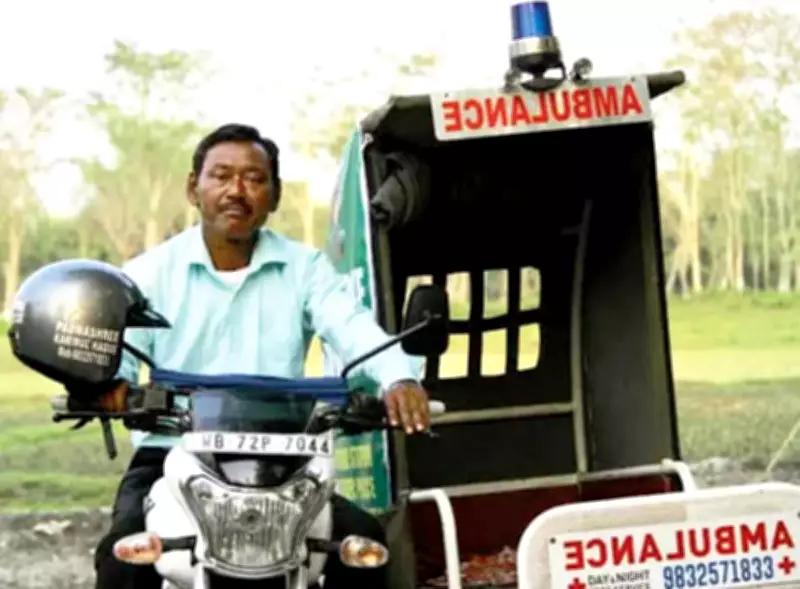
Karimul Haque: The 'Ambulance Dada' Who Built a Lifeline on a Motorcycle
In the remote, muddy villages of North Bengal, where access to emergency medical care often means the difference between life and death, one man created an extraordinary system of hope. Karimul Haque, a humble tea garden worker with no formal medical training, transformed his personal tragedy into a mission that has saved thousands of lives across dozens of underserved communities.
A Personal Tragedy Sparks a Revolutionary Idea
The foundation of Haque's remarkable journey was laid by a devastating loss he could not prevent. After his mother passed away because he could not arrange an ambulance quickly enough, Haque made a solemn vow. He resolved that no one else in his village should face the same heartbreaking fate due to delayed medical assistance. This profound personal commitment pushed him toward a solution that no one in his community had previously imagined.
The Motorcycle That Became a Mobile Lifeline
In 1998, Haque purchased a motorcycle and began using it as an improvised ambulance service. The challenging terrain around Dhalabari in Jalpaiguri district—with its rough, narrow roads often cut off by weather and flooding—made conventional ambulones impractical. His motorcycle, however, could navigate these difficult paths where larger vehicles struggled.

What began as a simple transportation service quickly evolved into something much more significant. Haque started ferrying sick villagers to hospitals free of charge, often riding through dense forests and across damaged terrain that would have been impassable for traditional emergency vehicles.
From Skepticism to Trust: Building Community Confidence
Initially, Haque faced considerable skepticism and even mockery from his community. Some villagers questioned his motives, while others simply doubted the practicality of his approach. However, as people witnessed patients reaching critical medical care thanks to his efforts, the laughter gradually transformed into deep trust and appreciation.
By December 2016, reports documented Haque as the only reliable emergency lifeline for approximately 20 villages around Dhalabari. The nearest proper hospital remained about 45 kilometers away, while local public health centers lacked adequate facilities for serious medical emergencies.
Expanding Beyond Transportation: A Comprehensive Healthcare Model
Haque's vision extended far beyond simple patient transport. After receiving training from local doctors, he began providing:
- Basic first aid and wound treatment
- Essential injections when medically necessary
- Organized health camps in tribal areas
- Video consultations with qualified physicians
- Basic diagnostic tests including blood sugar and blood pressure checks
By 2020, The Better India reported that Haque and his sons had developed a more formal support system, creating what amounted to a grassroots healthcare response specifically designed for the unique needs of their underserved region.
National Recognition and Unwavering Commitment
Haque's extraordinary service eventually received national acknowledgment. The Government of India honored him with the prestigious Padma Shri award in 2017 for his outstanding social work. Official records from the Padma Awards dashboard confirm his inclusion among that year's distinguished recipients.
Despite this recognition, Haque's daily reality remained unchanged. He continued living and working within the same challenging ecosystem of remote villages, difficult roads, and urgent emergency calls. Reports from 2017 suggested he had already saved approximately 4,000 lives, while later profiles from 2020 indicated the number had grown to over 5,500 patients transported over the years.
The Enduring Legacy of Compassionate Action
Karimul Haque's story endures not because of grand pronouncements, but through consistent, repetitive action—one emergency call, one difficult ride, one patient at a time. In regions where institutional emergency care remains distant, he demonstrated how individual initiative can move faster than despair.

His motorcycle ambulance represents more than just a clever transportation workaround. It stands as a powerful testament to how organized, disciplined compassion—repeated daily—can transform communities. Haque proved that in India's rural heartlands, the most reliable emergency response often comes not from established institutions, but from determined individuals willing to fill critical gaps in the healthcare system.
Today, "Ambulance Dada" continues his vital work, reminding us all that meaningful change often begins with one person's decision to make a difference in their immediate community.





