

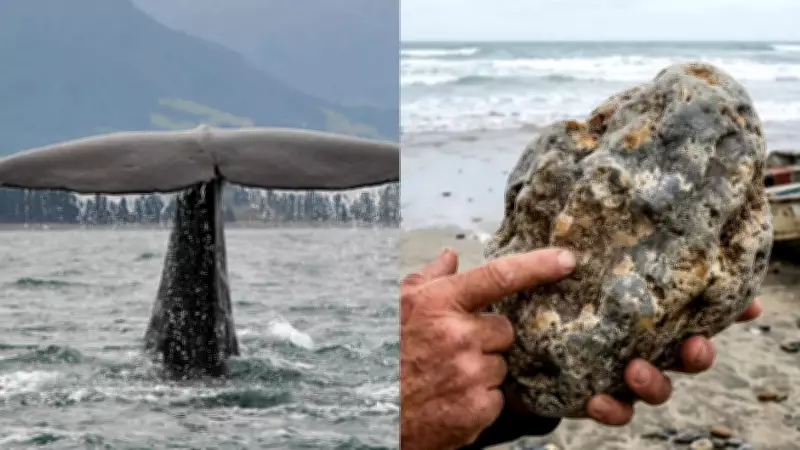
Ambergris: Nature's Priceless 'Floating Gold' from the Depths
Nature often astounds with its rare and valuable creations, and among them is ambergris, colloquially termed whale vomit or floating gold. This waxy substance, produced by sperm whales, has captivated human interest for centuries due to its immense worth, fetching prices as high as $40,000 per kilogram. While it might seem bizarre that something expelled from a whale could command such a fortune, the reasons lie in its rarity and unique properties.
What Exactly Is Ambergris?
Ambergris is a natural secretion from the intestines of sperm whales, a rare breed of marine mammals. It forms when these whales ingest indigestible materials like squid beaks, and over time, their bodies produce this substance to help expel such objects. Once released, it floats in the ocean, gradually hardening and transforming into a sought-after treasure.
The Origins and Formation Process
Scientists explain that ambergris develops internally in sperm whales as a response to foreign bodies. After expulsion, it undergoes a remarkable transformation: exposure to sunlight, saltwater, and air causes it to harden into a rock-like structure. This process, involving weathering and oxidation, results in a substance that varies in color—often white, grey, black, or brown—and texture, ranging from waxy to hard like rock.

Why Is It So Valuable?
The high value of ambergris stems from its scarcity and its role in the perfume industry. It acts as a natural fixative, helping fragrances last longer on the skin. Luxury perfume brands, such as Chanel, prize it for this quality, making it one of the most expensive natural substances globally. Reports indicate that quality ambergris can reach up to $40,000 per kilogram, highlighting its economic significance.
Appearance and Aroma Profile
Experts describe ambergris as having a wax-like consistency when fresh, which hardens over time. Its aroma is complex and unique, often characterized as musky with sweet, earthy notes reminiscent of a damp forest floor, combined with hints of ocean spray and cigar. The fragrance varies based on the piece's quality, with white and grey varieties particularly prized for their subtle, addictive scent.
Legal Status and Conservation Concerns
In India, the sale and trade of ambergris are strictly prohibited under the Wildlife Protection Act, 1972, as sperm whales are an endangered species. Declared endangered in 1970 due to hunting and environmental threats, their protection is a priority. While some countries like the United Kingdom and France allow its trade, experts argue that this indirectly promotes exploitation of these marine mammals, advocating for a global ban to safeguard their populations.






