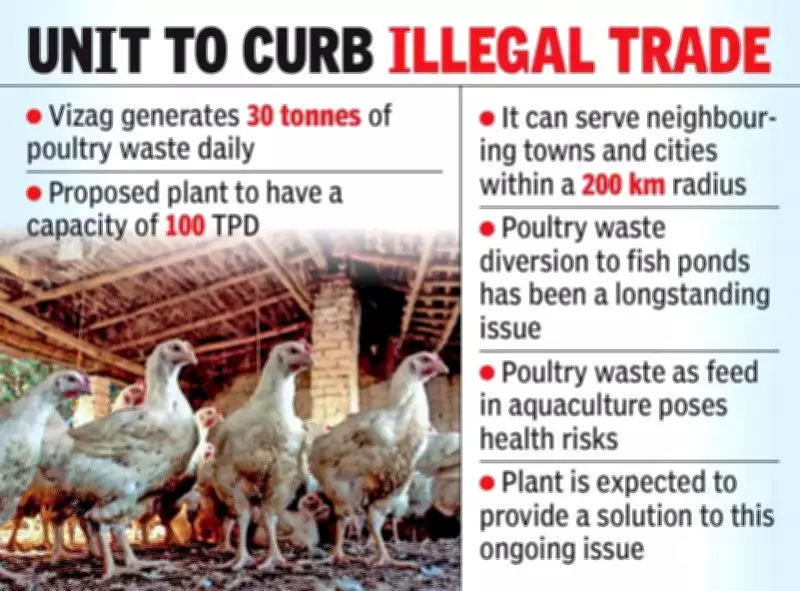
The port city of Visakhapatnam is poised to establish a dedicated poultry slaughter waste recycling facility in the near future, marking a significant step toward addressing longstanding environmental and public health concerns. Currently, under existing waste management regulations, poultry waste generated in the city is mandated to be transported to the Kapuluppada dumping yard for proper disposal.
Illegal Diversion of Poultry Waste Poses Serious Risks
However, a troubling practice has emerged where certain contractors and vendors in Visakhapatnam have colluded with pond owners and middlemen to illegally divert poultry waste to fish ponds, particularly those used for catfish farming, as well as to pig farms. While this illicit activity generates income for vendors and reduces feed costs for farmers, it enables middlemen and transporters to reap substantial profits at the expense of environmental degradation and significant public health hazards.
Swachh Andhra Corporation Steps In with Scientific Solution
To tackle these pressing challenges, the Swachh Andhra Corporation (SAC) has expressed keen interest in undertaking the construction of a chicken rendering plant in Vizag. This project will be implemented under a design, build, finance, and operate model, ensuring efficient management and operation. Once operational, the proposed facility, with a capacity of 100 tonnes per day, is expected to scientifically process poultry slaughter waste, transforming what is currently an environmental nuisance into potentially valuable by-products.

The plant will not only serve Visakhapatnam but also neighboring urban local bodies within a 200-kilometer radius, extending its benefits across the region. SAC has already floated an expression of interest for the construction of the plant, which is planned over an area of approximately five acres. The primary aim is to ensure proper handling, processing, and disposal of poultry slaughter waste collected from local vendors.
Conversion of Waste into Saleable By-Products
The recycling process will involve converting acceptable waste into poultry powder and fat oils, both of which are marketable by-products. This scientific treatment will be facilitated through an effluent treatment plant (ETP), ensuring that wastewater is fully treated and that no additional waste is generated from the facility. According to officials, from one tonne of raw material, the process yields about 340 kilograms (34%) of poultry by-product meal and 660 kilograms (66%) of water, with the treated water meeting the stringent standards set by pollution control boards through a scientifically designed ETP.
Persistent Illegal Trade Despite Enforcement Efforts
Despite regular efforts by the Greater Visakhapatnam Municipal Corporation (GVMC) to book cases against culprits and seize vehicles involved in the illegal trade, the practice continues to flourish. Poultry waste is often diverted to rural parts of Visakhapatnam and the Godavari districts. The mutual interests of catfish farmers, meat processors, and contractors have allowed this diversion practice to persist for several years, undermining enforcement drives by the GVMC.
Visakhapatnam generates approximately 30 tonnes of chicken waste daily, highlighting the scale of the issue. Experts have issued warnings that consumption of fish or prawns fed on rotten or contaminated chicken waste can lead to serious health complications, primarily due to the presence of antibiotic-resistant bacteria.
Political Discussions and Proposed Solutions
The issue of poultry waste diversion to fish ponds has been extensively discussed during several council meetings in the past, with ruling and opposition corporators exchanging allegations. The proposed recycling plant may offer a viable solution to this ongoing problem. A GVMC official revealed that the corporation had initially proposed to undertake the construction of the plant on its own, but the Swachh Andhra Corporation has voluntarily come forward to take up the project, demonstrating a collaborative approach to addressing the crisis.

In summary, the establishment of a poultry waste recycling plant in Visakhapatnam represents a critical intervention to mitigate environmental damage, curb illegal practices, and safeguard public health. By converting waste into useful by-products and ensuring scientific treatment, the facility aims to set a new standard for waste management in the region.