A recent study has cast a spotlight on a significant and worrying health disparity in southern India, particularly in Telangana, where men are dying considerably earlier than women. The research, drawing on 2022 data, points to a critical middle-age period as the primary driver of this life expectancy gap.
The Stark Numbers: A Six-and-a-Half Year Divide
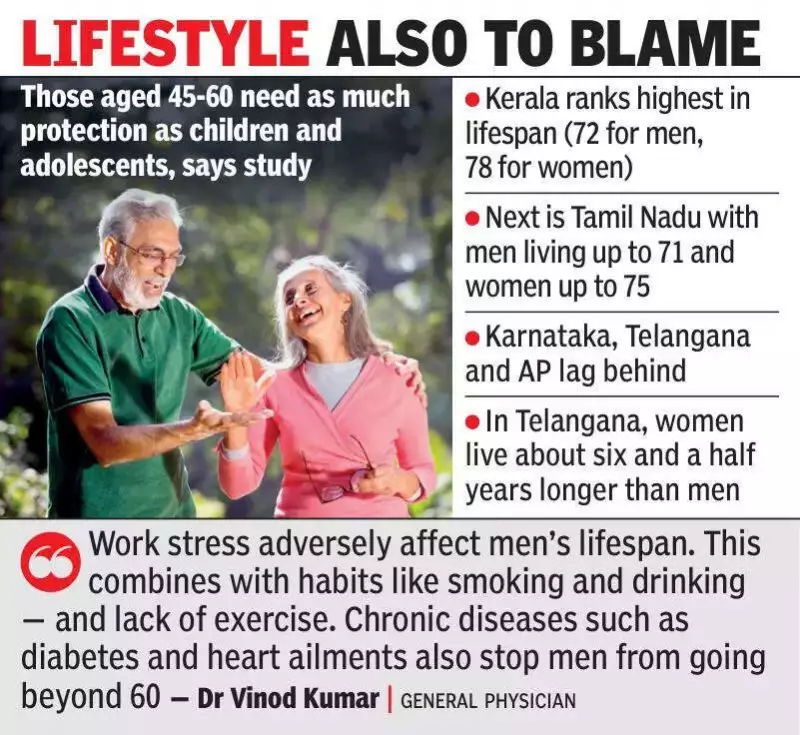
The findings, published in the International Journal of Physical and Social Sciences, present a clear picture. In Telangana, the average lifespan for women is 73.73 years, while for men it is just 67.70 years. This creates a disparity of approximately six and a half years. A similar trend is observed in neighbouring Andhra Pradesh, where men live an average of 67.33 years compared to women's 72.38 years.
The study, conducted by Kerala University using data from the Sample Registration System, compared southern states. Kerala leads the region with the highest life expectancy—72 years for men and 78 for women—attributed to its robust health system. Tamil Nadu follows, while Karnataka, Telangana, and Andhra Pradesh lag behind.

The Critical Culprit: Middle-Age Mortality
The analysis reveals that the core of the problem lies in premature deaths during middle age. The age group of 45 to 59 years is identified as the primary reason for the lifespan inequality, accounting for up to four years of the total gap. Deaths in the 65-79 year bracket also contribute, though to a slightly lesser extent.
"Deaths among children and adolescents under 20 have markedly gone down and have little impact on lifespan disparities today," the study notes. Instead, the focus has shifted to the 35 to 69 years group, where mortality is disproportionately affecting overall life expectancy, especially for men.
Expert Analysis and Prescribed Solutions
Medical experts explain the reasons behind this alarming trend. Dr. Vinod Kumar, a general physician, cited in the report, states, "Family responsibilities and work stress adversely affect men's lifespan. This combines with unhealthy habits like smoking and alcohol consumption — and lack of proper exercise." He added that chronic conditions such as hypertension, diabetes, and heart disease further prevent men from living beyond 60, compounded by a general negligence towards personal health.
In contrast, women are noted to have a slightly higher innate ability to withstand diseases and typically engage in fewer risky health behaviours. The study offers a direct prescription: to achieve equal lifespan, society and governments must protect those aged 45 to 60 years as much as they currently protect children under 20.
The research strongly advocates for special health schemes targeting this vulnerable demographic and emphasises the need for lifestyle interventions starting at age 35. It recommends regular health check-ups for people over 35 to enable early detection and management of chronic diseases. While improved medical care has successfully reduced infant mortality, the persistent adult lifespan gap now demands a new, focused public health strategy centred on the well-being of middle-aged individuals.