

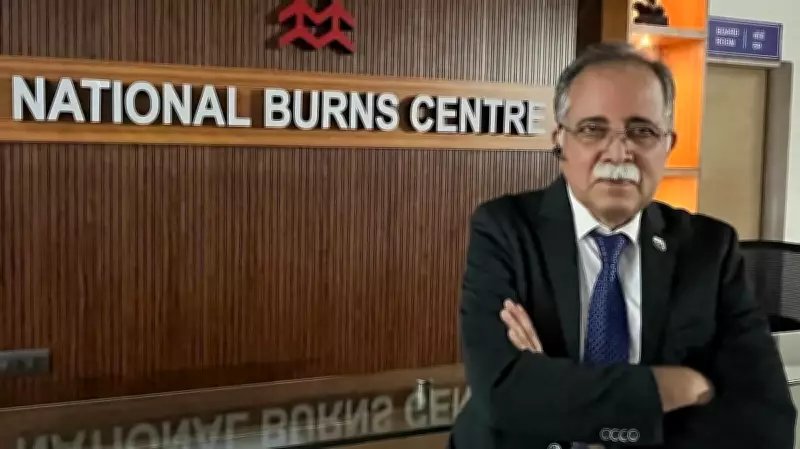
Plastic and reconstructive surgeon Sunil Keswani has emphasized the urgent need for greater awareness about skin donation in India. He noted that due to widespread ignorance, only a small fraction of burn survivors receive skin transplants each year, even though such grafts are critically needed for survival and recovery.
What is skin donation?
Skin donation is a simple and noble act carried out after death, where the outermost layer of skin is gently removed to treat burn patients. Skin is typically taken from non-visible areas such as the back, thighs and legs, ensuring there is no disfigurement. Only a very thin layer, about one-eighth of the skin thickness, is harvested. The procedure takes about 30 to 45 minutes and is conducted with dignity and respect. Skin must be donated within six hours of death. Once processed, it can be preserved in skin banks for up to five years. The donated skin is used as a temporary biological dressing for about three weeks. It helps reduce severe pain, prevents infection and fluid loss, and improves survival chances until the patient's own skin regenerates.
Scenario in India versus abroad
In developed countries, skin banking is well established and awareness levels are high. In India, however, there is still a wide gap between demand and supply. Despite millions of burn injuries being reported each year, donation rates remain low due to myths and lack of awareness. Even leading centres face a severe shortage, making skin a scarce, life-saving resource.

Skin banks in India
India has 34 skin banks, of which eight are in Maharashtra. The National Burns Centre (NBC) has played a role in setting up 22 of these facilities. These banks are crucial for processing, preserving and distributing donated skin to hospitals across the country.
Process of skin donation
After death, the family must give consent and inform a skin bank through a 24x7 helpline. A trained team reaches the location, screens the donor for suitability and harvests the skin using a dermatome. The body is then respectfully dressed and returned to the family. The process is safe, dignified and does not delay last rites.
How donated skin is used
Burn patients are treated in specialised centres. When burns exceed 40 to 50 percent of the body surface, the patient's own skin is insufficient. In such cases, preserved donor skin (allograft) is issued from skin banks and used as a temporary cover to prevent infection, reduce fluid loss, alleviate pain and improve survival chances.
Legal framework
Skin donation is regulated under the Transplantation of Human Organs and Tissues Act (THOTA), and overseen by bodies such as the National Organ and Tissue Transplant Organisation (NOTTO), Regional Organ and Tissue Transplant Organisations (ROTTO), and the State Organ and Tissue Transplant Organisations (SOTTO). Consent from next of kin is mandatory, commercial trade is illegal, and strict ethical and medical screening protocols are followed.
Role of the Airoli centre
The NBC established a state-of-the-art skin bank in 2009 in collaboration with international partners. Its functions include round-the-clock skin retrieval, processing using glycerol, preservation at controlled temperatures and distribution across the country.
Awareness campaigns
Awareness about skin donation remains significantly lower than that on organ donation. Myths, particularly that donation disfigures the body, persist. While large-scale national campaigns are limited, hospitals and NGOs are increasingly working to raise awareness through walkathons, car rallies, talks at condolence meetings, colleges and old-age homes.






