

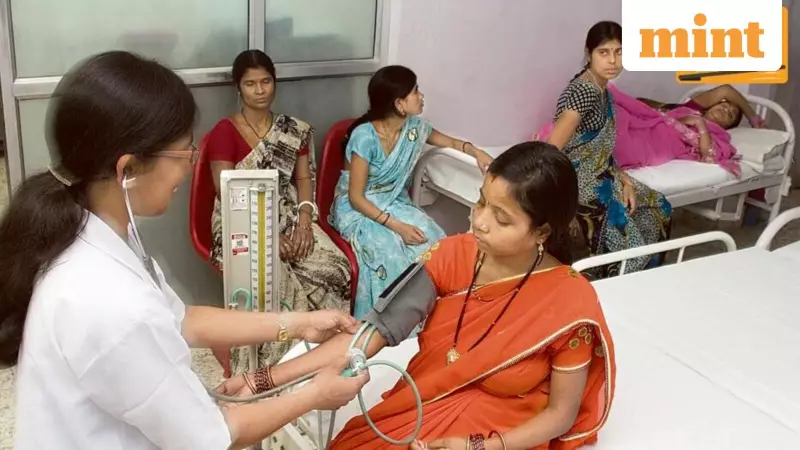
India's ambitious journey towards ensuring health for all its citizens has reached a crucial juncture. While the framework for Universal Health Coverage (UHC) is being built through schemes like Ayushman Bharat, the real challenge lies in transforming policy promises into guaranteed, high-quality care for every individual. This requires a fundamental strengthening of the health system's core pillars: its workforce, primary care infrastructure, and the supply of affordable, quality medicines.
Bridging the Critical Health Workforce Divide
A skilled and adequately distributed health workforce is the backbone of any successful health programme. Currently, India faces a severe and uneven distribution of doctors and medical professionals. The World Health Organization (WHO) estimates a staggering shortage of nearly 1.8 million health workers in the country. The situation is marked by a concentration of talent in southern and western states, leaving other regions and rural areas chronically underserved.
India reportedly has over 1.05 million registered doctors, but the number actively practicing is closer to 660,000. The nation falls short of the WHO-recommended threshold of 44.5 doctors, nurses, and midwives per 10,000 population, currently hovering between 28 and 33.5. The shortage of specialists at community health centres is particularly acute.

To correct these imbalances, experts propose creating a centrally managed National Health Workforce Pool. This system would involve recruiting and deploying doctors, nurses, and allied professionals across the country through a transparent process. Incentives like preferential weightage for postgraduate seats and short orientation programmes could facilitate service outside home states. This national cadre would not only address domestic gaps but also position India to contribute to global health initiatives.
Ensuring Medicine Quality and Expanding Access
Affordable medicines are meaningless without a guarantee of their quality and therapeutic efficacy. Strengthening India's health system demands a multi-pronged approach to its pharmaceutical supply chain.
State drug regulatory authorities need enhanced capacity for better oversight of manufacturing and distribution. The network of quality testing laboratories must be expanded and modernized. Financing for the Jan Aushadhi scheme should be increased to widen its coverage, while ensuring its quality protocols match those for government-procured medicines.
For better last-mile access, a voluntary quality certification programme for private pharmacies is suggested, allowing them to operate as satellite Jan Aushadhi outlets. Furthermore, a national pooled procurement mechanism for high-cost drugs and treatments for rare diseases could aggregate demand across states, improving bargaining power and ensuring equitable access.
Strengthening the Foundation: A Primary Care Push
The cornerstone of Universal Health Coverage is a robust primary healthcare system. Urban primary healthcare networks require expansion through well-equipped health centres and mobile units, especially for migrant populations. Primary-level screening must be seamlessly integrated with secondary and tertiary hospitals under the PM-JAY scheme to ensure continuity of care.
Greater emphasis is needed on preventive services for non-communicable and persistent communicable diseases. Home-based care models, supported by community workers and telehealth, can improve outcomes for the elderly and patients with disabilities, reducing hospital burden.
Finally, accelerating the establishment of State Public Health Cadres is vital. These cadres, blending clinical and managerial skills, would strengthen disease surveillance, programme management, and emergency response at district levels. Catalytic central funding through the Union Budget is essential to build this national capacity, supported by a National Health Workforce Registry for effective planning.
As noted by K. Srinath Reddy, former president of the Public Health Foundation of India (PHFI), the path from health coverage to health assurance requires these concrete steps to build a system that delivers reliable, quality care to every Indian, moving closer to the vision of a Viksit Bharat.






