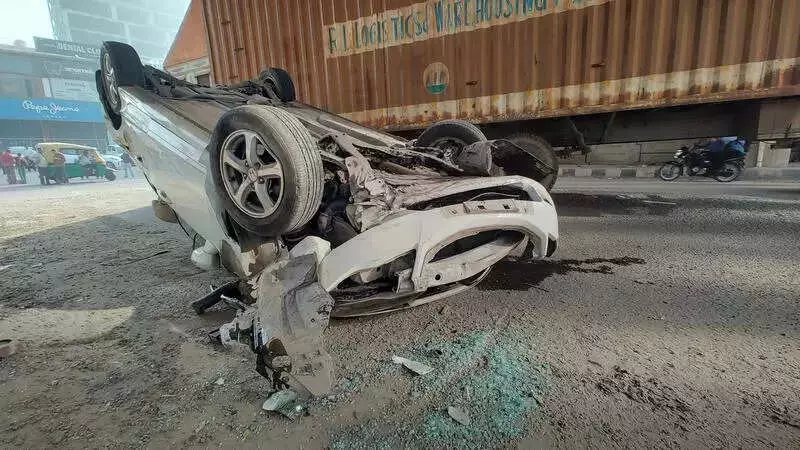
Punjab continues to grapple with a severe road safety crisis, averaging 13 fatalities every day, while significant deficiencies in its emergency medical response and trauma care systems undermine efforts to save lives during the critical "golden hour" after a crash.
Alarming Toll and Persistent Vulnerabilities
The state recorded 4,829 deaths in road accidents during 2023, marking a persistent and grim trend on its highways. While Punjab's national ranking for total accidents improved slightly to 18th in 2023 from 17th in previous years, the fatality figures remain deeply concerning. Historical data shows 4,756 deaths in 2022, 4,589 in 2021, 3,898 in 2020, and 4,525 in 2019.
Statistical analysis reveals a rate of 20.4 accidents and 15.7 deaths per lakh population for 2023. A major area of concern is the high-speed national highway network, where 1,895 fatalities occurred last year, almost mirroring the 1,881 deaths recorded on these corridors in 2022.
Critical Gaps in Emergency Medical Response
The state's capacity to provide timely pre-hospital care is a major challenge. Current ambulance response times average 19 minutes in rural areas and 15 minutes in urban zones, intervals considered too long for effective intervention in severe trauma cases where minutes count.
There is a severe shortage of advanced life support (ALS) ambulances. Against a requirement of 60 such units—based on the norm of one per five lakh population—Punjab operates only 25, leaving a deficit of 35 ALS ambulances. For basic life support (BLS) ambulances, the state has 331 vehicles, meeting the one-per-lakh population standard. However, about 50 of these are at the end of their service life and need urgent replacement to maintain reliable emergency services.
Trauma Care Infrastructure and Planned Upgrades
Trauma care facilities also require strengthening. Five designated trauma centres in Jalandhar (Level II), Khanna, Pathankot, Fazilka, and Ferozepur (Level III) need gap funding to become fully operational. These centres require enhanced diagnostic capabilities, surgical readiness, and supporting infrastructure to manage serious crash injuries effectively.
In a recent meeting, the Punjab State Road Safety Council approved a series of measures to address these critical gaps. Key decisions include:
- Procurement of 35 new ALS ambulances at an estimated cost of ₹13.04 crore.
- Acquisition of 50 new BLS ambulances with an outlay of ₹12.29 crore.
- Strengthening trauma care through the purchase of 11 fully automated analysers for rapid diagnostics (₹0.41 crore) and 100 surgical kits for emergency procedures (₹0.25 crore).
Officials stated that these proposed augmentations are specifically aimed at improving response times and treatment capacity during the golden hour, which is crucial for reducing preventable deaths on the state's roads. The total planned investment for these emergency medical service upgrades exceeds ₹25 crore.