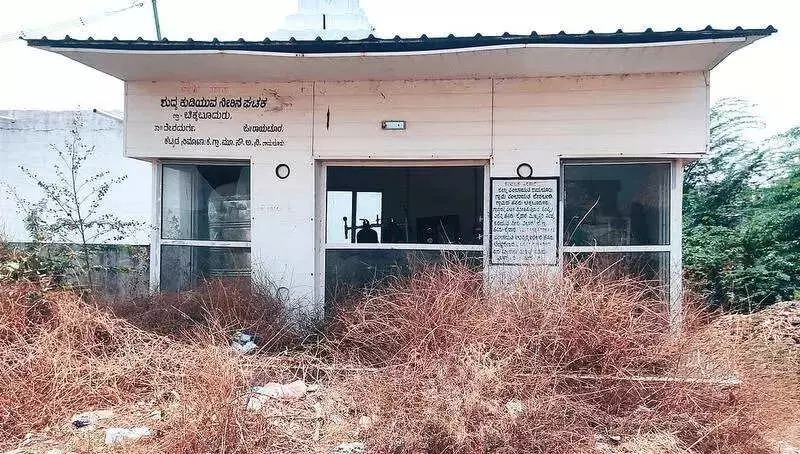
In the village of Chikka Budur in Raichur's Devdurg taluk, a silent, rusting reverse osmosis (RO) unit stands as a stark symbol of a widespread failure. This scene is replicated across the Kalyana Karnataka region, where a crucial government scheme to provide clean drinking water has collapsed, leaving thousands dependent on hazardous water sources.
Massive Failure of a Crucial Scheme
The state government initiated a major project to combat naturally occurring arsenic and fluoride in groundwater, installing 4,105 pure water RO units across seven districts of Kalyana Karnataka. The responsibility for maintaining these life-saving installations was given to local gram panchayats and, in some cases, private contractors. However, due to severe and systemic neglect in upkeep, a staggering 1,438 units have been decommissioned. Machinery worth crores of rupees is now left to rust in the open, rendering the massive investment futile.
Currently, only 2,667 units are operational, raising grave concerns about the continued reliance on contaminated water by a significant portion of the rural population. The district-wise breakdown of the failure reveals the extent of the crisis:

- Kalaburagi: Worst affected, with 378 out of 510 units shut down. Only 132 are working.
- Koppal: 281 units non-functional out of 674 installed.
- Vijayanagara: 250 units decommissioned.
- Yadgir: 247 units defunct.
- Raichur: 155 units not working.
- Bidar: 79 units shut down.
- Ballari: 48 units non-operational.
Health Crisis and Public Outcry
The human cost of this administrative failure is severe and mounting. With the RO units defunct and reports indicating that taps under the Jal Jeevan Mission are also dry in many areas, villagers are forced to consume water with dangerous levels of contaminants. This has led to a surge in waterborne diseases.
"The shortage of clean drinking water is serious in rural areas, and people forced to consume contaminated water are contracting diseases like dengue, diarrhoea, typhoid, and hepatitis A. There were deaths due to diarrhoea in some districts. To prevent this, the govt should provide clean water," says Vijayakumar Hanagi, a social activist from Koppal.
The situation has drawn judicial scrutiny. The Karnataka High Court, hearing a public interest litigation (PIL) filed by Ramesh L Nayak, recently took the government to task and issued a notice, highlighting the gravity of the issue.
Official Response and a Glimmer of Hope?
When confronted with the crisis, officials point to a bureaucratic process for repairs. Kalaburagi Zilla Panchayat CEO Bhanwar Singh Meena stated that priority is being given to repairing defunct units in the district's rural parts, where the problem is most acute. He explained the mechanism: "Minor repairs are conducted by the gram panchayat. For expenses over Rs 1 lakh, a proposal is submitted to the govt."
However, this slow, tiered approach appears inadequate against the scale of the problem. The continued presence of 1,438 broken units, coupled with failures in other water supply projects due to lack of sources, unscientific work, and fund shortages, indicates a systemic issue that demands urgent and comprehensive action. The health of thousands of citizens in Kalyana Karnataka hangs in the balance, waiting for the promise of clean water to be restored.