

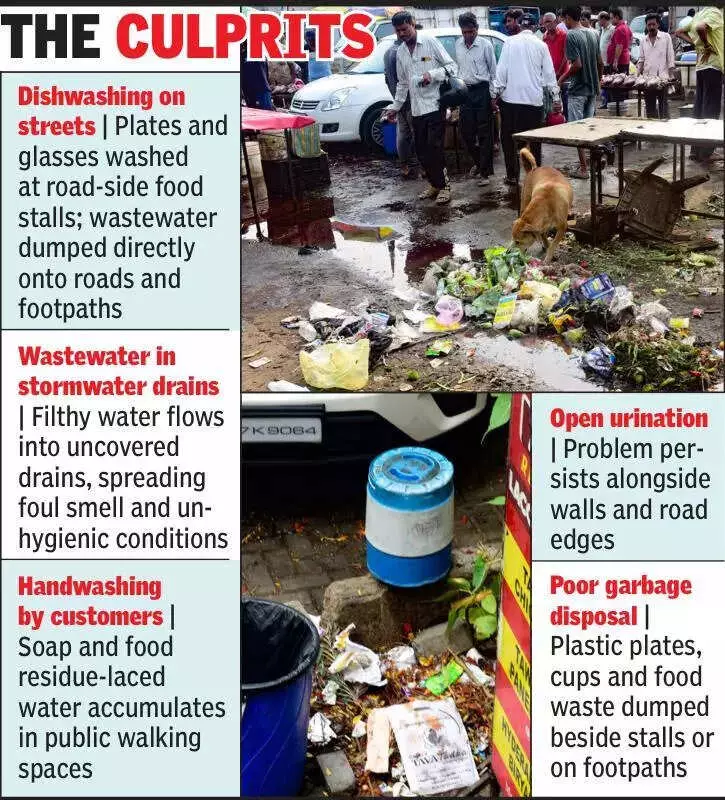
The rapid expansion of Nagpur has brought to light a severe and growing civic concern: a breakdown in basic sanitation across the city. Residents are now confronting a daily reality of unhygienic conditions caused by roadside food joints, rampant open urination, and mismanaged garbage, exposing significant gaps in enforcement and urban management.
Food Stalls Create Filthy Footpaths and Roads
Across Nagpur's bustling commercial zones, residential areas, and main roads, a common sight has become a major nuisance. Numerous food stalls and vendors are washing utensils, plates, and cooking equipment right on the spot. This activity results in wastewater being discharged directly onto roads or into open drains. The problem intensifies during peak morning and evening hours when these joints are most active.
With no designated washing areas or proper drainage, the dirty water—mixed with food scraps, oil, and soap—spreads across footpaths and streets. This creates foul-smelling, slippery patches that pose a risk to pedestrians throughout the day. The stagnant water also attracts flies, fostering unhygienic environments for both customers and the general public.

Ramesh Patil, an office-goer from Sitabuldi, expressed his frustration, stating that the daily dumping of dirty water makes walking unpleasant and poses a serious infection risk, especially for children. He urged civic authorities to take immediate action.
Parallel Menace of Open Urination and Garbage Dumping
Compounding the wastewater issue is the persistent problem of open urination. People continue to relieve themselves in public spaces, including along compound walls, beneath flyovers, behind hoardings, and even on main roads. This practice leaves behind an overpowering stench and visible filth, degrading the city's environment.
Simultaneously, garbage management around these food hubs remains critically poor. Due to a lack of bins and irregular collection services, vendors and customers often discard plastic plates, cups, food waste, and packaging material right beside the stalls or on nearby footpaths. This leads to unsightly and unhealthy piles of refuse accumulating in public areas.
Homemaker Sunita Deshmukh from Dharampeth, while acknowledging her love for street food, criticized the disgusting practice of leaving wastewater to flow everywhere. She emphasized the need for a balance between livelihoods and public hygiene.
Citizens' Outcry and Official Response
The deteriorating conditions have sparked widespread complaints from Nagpur's residents. Anil Rao from Sadar described commuting through certain areas as unbearable due to the combined smell of garbage, dirty water, and human waste. He asserted that the city can no longer afford to ignore this escalating crisis.
When approached, Gajendra Mahalle, the chief sanitary officer of the Nagpur Municipal Corporation's (NMC) solid waste management department, assured that strict action would be taken. He stated that offenders involved in public urination or open littering would face raids and fines, with stricter measures to follow if the issues persist.
This civic challenge has also attracted judicial attention. The Nagpur bench of the Bombay High Court recently directed the Commissioner of Police to completely eradicate the menace of illegal food joints and restaurants operating across the city, indicating the severity of the problem.
The situation in Nagpur underscores a critical need for integrated civic planning, stricter enforcement of sanitation laws, and the provision of basic facilities like public toilets and waste disposal systems to match the pace of the city's growth.






