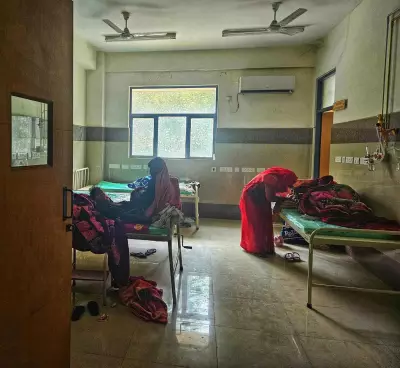
Madurai is witnessing a concerning increase in respiratory illnesses this winter season, with doctors and residents pointing to the city's dust-laden roads and rampant construction activities as the primary culprits. Medical professionals report a significant surge in new cases of wheezing, even among individuals with no prior family history of such conditions.
Dust, Traffic, and Deteriorating Air Quality
The poor air quality, worsened by prolonged exposure to dust in traffic-congested zones, is creating a public health challenge. An official from the Tamil Nadu Pollution Control Board (TNPCB) confirmed that Madurai's Air Quality Index (AQI) typically remains above the moderate level of 100 during this period, which is considered unhealthy for sensitive groups. On a recent Friday, the AQI was recorded at 114.
The official explained that lower wind speeds in winter prevent dust and other particles from dispersing, unlike in summer when Madurai's AQI often stays below 60. This seasonal stagnation traps pollutants closer to the ground.

A City Struggling for Clean Air
Madurai's battle with polluted air is long-standing. In the Swachh Vayu Survekshan 2024, the city scored 77.7, ranking at the bottom among Indian cities with a population above 10 lakh. Although it has moved one rank up from the previous year, air pollution remains a persistent and serious concern.
For citizens living near busy traffic junctions and ongoing construction sites, the rising dust levels have made daily life difficult. "There is constant dust in the air. Children and elderly people in our area are falling sick with cough and throat problems that persist for over a week," said K Raman, a resident of Tallakulam. He added that commuting has become particularly challenging as the dusty environment exacerbates throat irritation.
Medical Impact and Preventive Advice
A doctor from the Government Rajaji Hospital noted that cases of common cold and influenza virus usually rise from November to January. However, the current spike in respiratory distress is notable. "We see 200 to 240 outpatients daily, out of which 10 to 20% are new wheezing cases," the doctor revealed.
He assured that with continuous treatment, including antibiotics and inhalers, these conditions can be managed. For prevention, he strongly recommended:
- Maintaining good hand hygiene.
- Staying adequately hydrated.
- Using masks in crowded public places and while riding vehicles.
- Avoiding smoking and exposure to triggers like dust and mosquito coils.
"Most mild respiratory illnesses settle with simple home remedies and rest, but medical care should be sought if symptoms are not resolved by the third day," he advised.
Calls for Action and Civic Measures
Residents and authorities are suggesting concrete steps to mitigate the crisis. S Padhmapriya, a resident of Melamadai, proposed planting more small trees and shrubs along wide roadsides to cover open soil and reduce dust.
The TNPCB official recommended reducing construction and demolition activities during this vulnerable period and called for strict enforcement against the open burning of waste. He also identified old vehicles, particularly diesel vehicles older than 15 years, as a significant contributor to the city's growing pollution.
Responding to the issue, an official from the Madurai Corporation stated that proactive measures are being taken. The city is acquiring a new sand sweeping machine and intensifying efforts to control dust pollution. These steps include stricter enforcement of construction waste management norms and increased frequency of sand sweeping on major roads.