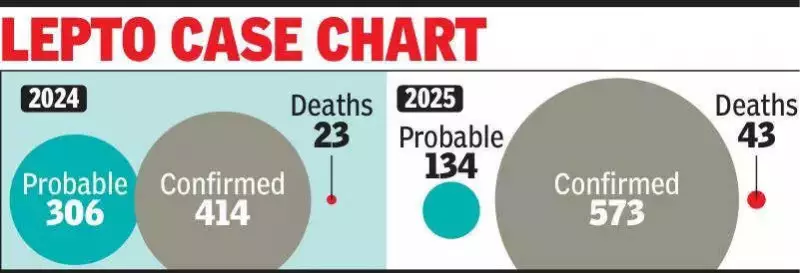
Health authorities in Ernakulam district, Kerala, have raised an alarm following a near doubling of fatalities caused by the bacterial infection leptospirosis in 2025. The district recorded 43 deaths last year, a significant jump from the 23 deaths reported in 2024. Officials have linked this alarming spike to poor uptake of preventive medicine and the presence of high-risk urban conditions.
Improved Testing Reveals True Scale of Outbreak
The surge in confirmed cases is partially attributed to more accurate and faster diagnostic methods. District health officials have shifted from traditional antibody tests, which took 5-7 days for results, to advanced PCR testing that delivers results within three days. This improved surveillance has provided a clearer, more concerning picture of the disease's prevalence within the city limits of Kochi (Ernakulam).
New Symptoms and High-Risk Urban Environment
Doctors are observing a change in the clinical presentation of leptospirosis patients. Beyond the classic symptoms of fever and body pain, new signs like gastrointestinal issues, cough, and breathlessness are now being reported. A senior health official from Ernakulam confirmed that most cases are emerging from densely populated city areas plagued by waterlogging, clogged drains, and a high rodent population.

"Unlike in previous years, doctors noticed lepto patients appeared with breathlessness, cough and stomach pain," the official stated. This shift in symptoms is complicating early diagnosis.
The Critical Danger of Skipping Follow-Up Care
A doctor from the Government Medical College Hospital in Ernakulam issued a stern warning about the dangers of neglecting medical follow-up. Many patients, after recovering from an initial fever, avoid further consultation. This period is precisely when the Leptospira bacteria continue to multiply in the body, leading to severe complications.
"We saw lepto patients who fell unconscious or into a coma stage, were in worse health condition or died before we could do anything. Some patients died within five days after symptoms surfaced," the doctor revealed, emphasizing the urgent need for prophylaxis and immediate medical attention at the first sign of illness.
Organ Damage Pattern Changes, Calls for Coordinated Action
Physician Dr. Sunny P. Orethal from Rajagiri Hospital highlighted another worrying development. In critical cases, the bacteria are now damaging the lungs and heart even before affecting the kidneys and liver, which was previously considered the typical progression. This finding underscores the aggressive nature of current infections.
In response to the crisis, district health officials are stressing the need for a multi-departmental approach. Coordination between health, agriculture, animal husbandry, and civic departments is crucial, especially since cases are being reported even among those who simply walk on contaminated city streets. Experts are calling for periodic studies to update and strengthen communicable disease control measures.