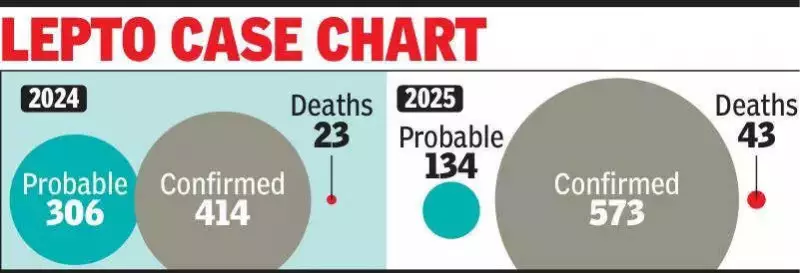
Health authorities in Ernakulam district, Kerala, have raised an alarm following a disturbing near-doubling of deaths due to leptospirosis in 2025. The bacterial infection claimed 43 lives last year, a significant jump from the 23 fatalities recorded in 2024. Officials point to inadequate intake of preventive medicine and high-risk urban conditions as primary culprits behind the surge.
Improved Testing Reveals Wider Spread, New Symptoms Emerge
The spike in fatalities coincides with an increase in confirmed cases, which health officials attribute to more accurate and faster diagnostic methods. The district has shifted from antibody tests, which took 5-7 days for results, to PCR testing that delivers results within three days. This improved surveillance has painted a clearer, and more concerning, picture of the outbreak's scale.
Doctors are also reporting a change in the clinical presentation of the disease. Beyond the classic symptoms of fever and body pain, patients are now exhibiting gastrointestinal issues, cough, and breathlessness. A senior health official from Ernakulam confirmed that unlike previous years, many patients now present with stomach pain and respiratory distress alongside other signs.

Urban Hotspots and a Critical Gap in Follow-up Care
The outbreak is concentrated within Kochi's city limits, where conditions are ripe for the spread of the bacteria carried by rodents. High population density, chronic waterlogging, and clogged drainage systems create ideal breeding grounds for the pathogen. The risk is not limited to traditional occupational groups; cases are being reported even among those who simply walk on city streets.
A critical factor in the high death toll, according to a doctor from Ernakulam Government Medical College Hospital, is patients' failure to seek follow-up care. "Patients often feel relieved after recovering from the initial fever and do not return for a check-up," the doctor explained. During this period of perceived wellness, the Leptospira bacteria continue to multiply, leading to severe complications like organ failure. Some patients deteriorated rapidly, falling unconscious or dying within five days of symptom onset, before medical intervention could be effective.
Organ Damage Pattern Shifts, Calling for Coordinated Action
In a worrying development, physicians are observing a shift in how the disease attacks the body. Dr. Sunny P. Orethal, a physician at Rajagiri Hospital, noted that in critical cases, the bacteria are now damaging the lungs and heart even before affecting the kidneys and liver—the organs traditionally known to be vulnerable. This underscores the aggressive nature of current infections.
In response to the crisis, district health officials are emphasizing the urgent need for inter-departmental coordination involving health, agriculture, and animal husbandry departments to control the rodent population and environmental factors. The consensus is clear: public awareness about the necessity of taking prescribed prophylaxis (doxycycline) in high-risk areas and seeking immediate, continuous medical attention for fever is paramount to preventing further casualties.