

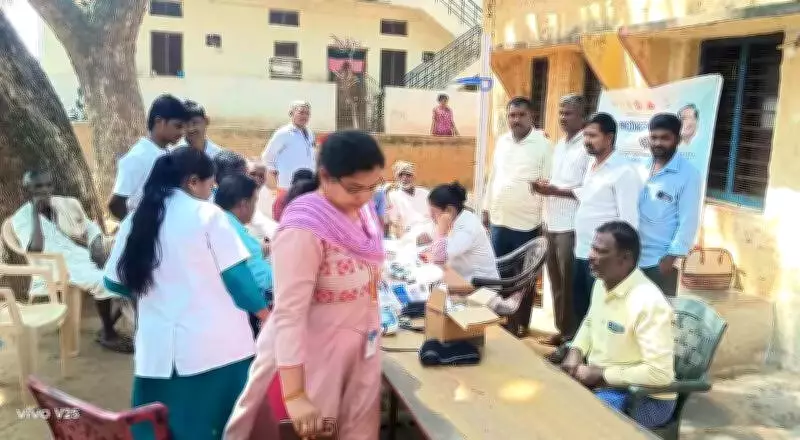
Koppal Health Camp Sparks Outrage Over Absence of Doctors
A health camp organized for residents of Kunikeri tanda in Koppal taluk on Saturday has drawn strong criticism after no doctors attended the programme, despite prior assurances from the district administration. The incident has highlighted ongoing concerns about healthcare access in pollution-affected communities.
Broken Promises and Administrative Failures
Following numerous complaints about health problems caused by industrial pollution in the village, Koppal Deputy Commissioner Dr. Suresh B. Itnal assured residents that a special health camp would be conducted. He directed District Health Officer Dr. Lingaraj T. to make all necessary arrangements for comprehensive medical consultation.
Accordingly, the camp was organized on March 7 at Kunikeri tanda. However, only staff nurses—Suma K. Hiremath, Hanumamma Neeravari, Kavita D., and Netra—along with lab technician Sanjeev Kumar were present. Notably, no MBBS or BAMS doctors attended the camp, leaving villagers without the specialized medical attention they had been promised.

Community Disappointment and Economic Sacrifice
Local activist Ramesh Dambralli brought the absence of doctors to the attention of Deputy Commissioner Itnal, who assured that the matter would be taken up with the district health officer. Despite this complaint, doctors still did not arrive at the camp throughout its duration.
Kunikeri tanda is considered one of the worst industrial pollution-affected villages in Koppal taluk, with residents claiming that nearly 75% of the population suffers from various pollution-related ailments, including asthma and cancer. Villagers expressed profound disappointment over the conduct of the camp, stating that many residents sacrificed their daily wages to attend in the hope of receiving proper medical consultation.
The incident, they emphasized, reflects the continuing apathy of concerned departments toward the health issues of pollution-affected communities.Conflicting Explanations from Health Authorities
In response to queries, District Health Officer Dr. Lingaraju T. stated that the programme held at Kunikeri tanda was only intended to be a screening camp. However, when informed that a banner at the venue described it as a ‘health camp,’ he said he would contact the taluk health officer and the doctor concerned and respond after verifying the details.
This discrepancy between official statements and on-ground reality has further fueled frustration among villagers, who feel their health concerns are being systematically neglected by authorities.
Broader Implications for Public Health Governance
The failed health camp underscores significant gaps in healthcare delivery mechanisms in rural areas, particularly those grappling with environmental health hazards. The absence of doctors at a camp specifically organized for pollution-affected populations raises serious questions about implementation of public health initiatives.
Residents of Kunikeri tanda continue to face daily health challenges from industrial pollution, with limited access to medical facilities exacerbating their suffering. The incident serves as a stark reminder of the urgent need for more accountable and responsive healthcare systems in vulnerable communities.






