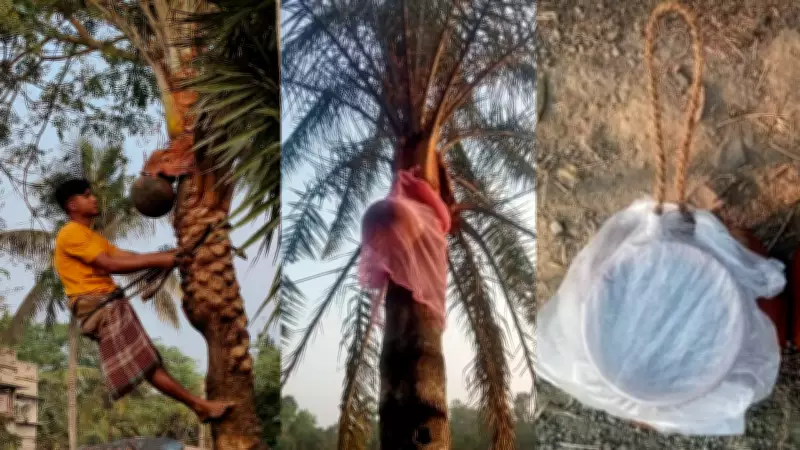
In the wake of recent Nipah virus alerts, traditional date palm tappers, known locally as shiulis, in the Joynagar region of South 24 Parganas have begun adopting precautionary measures to safeguard their sap collection processes. While health authorities have not declared an immediate threat, the community is taking proactive steps to prevent potential contamination from bats, which are known carriers of the virus.
Innovative Protective Techniques by Shiulis
Nur Alam Seikh, a 30-year-old shiuli from Futigoda village, exemplifies this cautious approach. Owning over 400 date palm trees, he has started using discarded date palm barks to cover the nol (pipe) and earthen pots used for collecting fresh sap. "As a third-generation shiuli, I adhere to traditional methods, but the Nipah alert prompted me to cover exposed areas as much as possible," Seikh explained. On average, he collects 250 litres of raw sap daily, highlighting the scale of this seasonal activity.
Community Outreach and Awareness Efforts
The Joynagar Majilpur area is home to more than 10,000 shiulis and associated workers, concentrated in villages such as Chupijhara, Mayahauri, Hatchapri, Natunhat, Futigoda, Mayda, Baharu, and Dakshin Barasat. Ashok Kayal, founder and secretary of the Joynagar Moa Nirmankari Society, emphasized ongoing quality control measures. "We are actively spreading awareness and introducing new protective methods during sap collection as part of our efforts to maintain industry standards," Kayal stated.

Impact on the GI-Tagged Moa Industry
Joynagar moa, a Geographical Indication (GI)-tagged sweet delicacy, represents a seasonal business worth approximately Rs 30 crore, typically running from mid-November to the end of February. Key ingredients include nolen-gur (liquid jaggery), Kanakchur khoi (aromatic popped rice), ghee, and khoa. This year, consistent cold nights have enhanced both the quality and quantity of date sap compared to previous seasons.
Market Perceptions and Consumer Queries
Subodh Naskar, a shiuli from the Baharu region, noted increased public inquiries following the Nipah alert. "Many people are unaware of the differences between raw date palm sap and processed liquid jaggery," he said. Naskar supplies nolen-gur and patali (solid date jaggery cubes) to Kolkata and other states, underscoring the widespread reach of these products.
Business Resilience During Peak Season
Popular moa sellers in Joynagar and Baharu are determined to avoid disruptions during this crucial period. Piyali Ghosh Maity, owner of the renowned Bunchki's moa, has instructed her shiulis to maximize coverage during sap collection. "We are taking every possible step to ensure safety without compromising on tradition," Maity remarked. Her grandfather, Purnachandra Ghosh, alias Bunchki babu, along with Nitya Gopal Sarkar, is credited as a pioneer of Joynagar's moa industry since 1929.
Sales Trends and Future Outlook
Monilal Modak, a winter delicacy sweets owner in Sealdah market, observed a temporary downturn in moa sales due to the Nipah alert. "Fortunately, no new cases have emerged, and we anticipate a resurgence in demand," he said. While shiulis report no significant negative impact on their jaggery business, there is an annual sales dip after Makar Sankranti, a trend that continues this year.
Overall, the Joynagar community's adaptive measures reflect a blend of tradition and modern precaution, ensuring the continuity of their cherished moa industry while addressing public health concerns.