

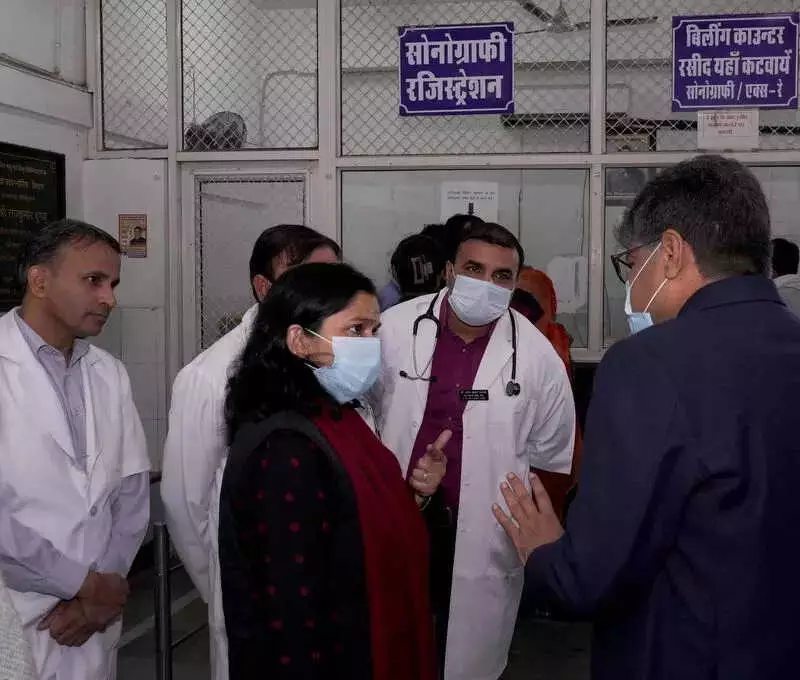
The health department in Rajasthan has raised a serious alarm over the non-deployment of specially trained medical staff in critical areas like delivery rooms and newborn care units. This issue comes at a time when winter-related complications are increasing the health risks for both mothers and their newborns.
Lakhs Spent on Training, But Staff Posted Elsewhere
Despite investing lakhs of rupees in training programmes for nurses and other medical personnel, a concerning pattern has emerged. Trained staff are frequently found posted to departments other than the labour rooms, maternity operation theatres, and newborn care units for which they were specifically upskilled. This misallocation is leading to a critical gap in specialised care where it is needed most.
On Thursday, the department underscored the gravity of the situation. Officials stressed that the presence of competent staff in delivery rooms, maternity OTs, Newborn Stabilization Units (NBSU), Sick Newborn Care Units (SNCU), and Neonatal Intensive Care Units (NICU) is non-negotiable. It is essential for reducing maternal and neonatal mortality rates and for ensuring quality institutional deliveries and emergency obstetric and newborn care.

Strict New Posting Orders Issued
To tackle this systemic failure, the department has issued a firm directive. In an order released by Principal Secretary (Medical Education) Gayatri Rathore, it has been mandated that in all institutions under official supervision, staff trained for specific roles must work in those designated areas for a minimum period of three years.
The order further clarifies that if any change in posting becomes unavoidable, prior permission from the health department will be compulsory. Moreover, a trained staff member can only be replaced by another professional with equivalent training. Department officials have been instructed to ensure strict compliance with these rules.
Creating a Specialised Nursing Cadre
Looking for a long-term solution, the health department is also moving to establish a specialised cadre of nurses. These nurses will be trained explicitly for high-pressure environments like operation theatres, ICUs, labour rooms, and SNCUs.
Officials believe this dedicated cadre will significantly strengthen critical care services in government hospitals. It will also address the current lack of clear posting guidelines for nurses with specialist skills, ensuring their expertise is utilised effectively.
At present, the practice of replacing trained staff with untrained personnel or posting specialist nurses to community and primary health centres is having a dual negative effect. It is hampering the quality of healthcare delivery in tertiary centres and leading to a massive underutilisation of expensive, state-sponsored training.
The department's ultimate goal is clear: to retain these specially trained nurses within tertiary care centres. This strategic retention is aimed at leveraging their expertise to directly improve health outcomes for mothers and newborns across the entire state of Rajasthan.






