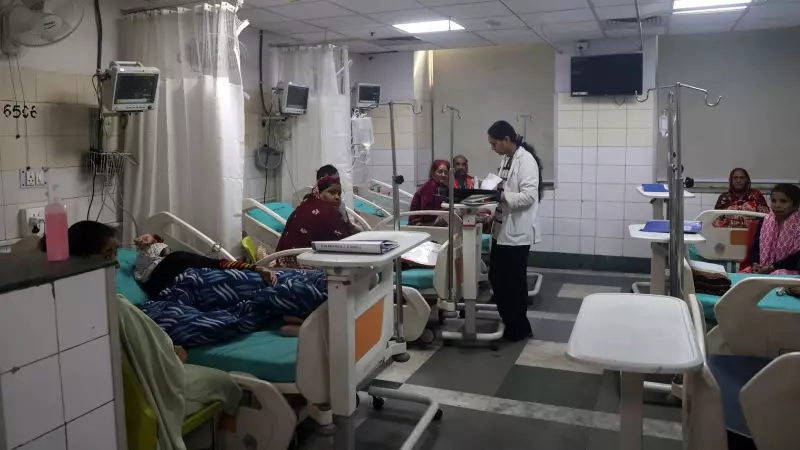
A devastating public health crisis has struck Indore, Madhya Pradesh, claiming at least eight lives and hospitalising over 200 people after sewage contaminated the drinking water supply in the Bhagirathpura area. Shockingly, internal documents reveal that municipal officials were aware of the pipeline faults for months but failed to act promptly, leading to the tragic outbreak.
How Sewage Mixed with Drinking Water
Investigations into the tragedy pinpointed the cause to a critical infrastructure failure. A toilet was constructed illegally, directly above a main drinking water pipeline near a police outpost. Crucially, this toilet was built without the mandatory safety tank. This direct breach allowed raw sewage to seep into the potable water line, poisoning the supply to households.
While the administration has officially linked four deaths and 212 hospitalisations to the contaminated water, local reports indicate the toll is higher, with eight fatalities and over 1,400 people falling ill. Residents had been complaining for some time about a foul stench and an acidic taste in their water, but decisive action was only taken after the first deaths were reported on December 29, 2025.
Warnings Ignored and Files Pending for Months
Evidence suggests a severe administrative failure. The first official warning about water quality issues was reportedly registered through the Indore Mayor's helpline two months before the outbreak. In 2025 alone, the city recorded 266 complaints about water quality, with Zone 4 (which includes Bhagirathpura) accounting for 23 of them.
Local Corporator Kamal Waghela made a damning allegation. He stated that a file to lay a new Narmada pipeline was prepared as early as November 12, 2024, after officials identified faults in the existing water lines. However, this file was allegedly kept pending for nearly seven months. The tender was finally floated on July 30, 2025, and the work order was passed on December 26, 2025—just as deaths began to surface. Waghela claimed officials repeatedly told him the matter was 'under process'.
Administrative Reaction and Actions Taken
Following the crisis, Indore Municipal Corporation Commissioner Dilip Kumar cited poor coordination and serious lapses in safety checks. He confirmed that a leakage in the main pipeline went unnoticed and that the illegally built toilet had no safety tank. “We found chambers intersecting the distribution line. They are now being diverted,” Kumar stated.
In response to the tragedy, Madhya Pradesh Chief Minister Mohan Yadav announced financial assistance of Rs 2 lakh each to the families of the deceased and assured that the state government would cover all treatment costs for the affected patients. A three-member committee led by IAS officers has been formed to investigate the deaths.
On the disciplinary front, the water supply Assistant Engineer and the zonal officer have been suspended, while the sub-engineer has been removed from duty. Commissioner Kumar held the zonal officer responsible for failing to ensure coordination.
National Human Rights Commission Steps In
The National Human Rights Commission (NHRC) has taken suo motu cognisance of the incident. The commission observed that the matter raises a serious issue of violation of the victims' human rights and has issued a notice to the Madhya Pradesh government, seeking a detailed report within two weeks.
This incident casts a long shadow over Indore, a city celebrated as India's cleanest for eight consecutive years and a recent recipient of the Swachh Survekshan 2024-25 award. It exposes a deadly gap between public accolades and the grim reality of neglected civic infrastructure and accountability.