India faces a sobering reality in the global health landscape: it holds the highest mortality rate for breast cancer in the world. This fact, supported by multiple international studies conducted over decades, underscores a critical public health challenge. Despite nationwide awareness campaigns and screening drives aimed at promoting early diagnosis, the statistics reveal a persistent and grim picture.
The Stark Numbers: Late Detection Fuels High Mortality
According to data from the Indian Council of Medical Research (ICMR), cited in a 2025 government press release, India recorded an estimated 14 lakh (1.4 million) new cancer cases in 2023. Annually, the country sees over 1.57 million new cases, a number projected to increase. A distressing detail from CK Birla Hospital indicates that over 70% of cancer cases are diagnosed at advanced stages.
Dr. Monika Pansari, a surgical oncologist with 18 years of experience, confirms this trend from her practice. "We used to see quite a few advanced malignancies, cancers coming in stage III, stage IV. That used to be huge as far as breast cancer is concerned," she states. Late-stage detection complicates treatment and drastically reduces survival chances. However, early diagnosis can improve survival rates by up to 80% for certain cancers.
Research highlights breast cancer as one of the most prevalent yet preventable cancers if caught early. Omega Hospitals' analysis suggests 1 in 28 Indian women is at risk of developing breast cancer in her lifetime, with urban areas experiencing a higher burden.
Technological Evolution in Screening and Diagnosis
While breast self-examination for lumps remains a crucial first step, advanced technology can identify cancer much earlier. A mammogram, an X-ray of the compressed breast, can detect abnormalities up to two years before a physical symptom appears. Dr. Pansari notes that many women in India delay mammograms until after 40.
The technology itself has evolved significantly. "The quality of mammograms has changed from film to digital," explains Dr. Pansari. "Now, we can detect cancer even if it's very tiny, which was very difficult with older machines." Further enhancing this is tomosynthesis, a technique akin to a CT scan that creates multiple image slices of the breast, helping identify small tumours that standard mammograms might miss.
The Life-Saving Advantage of Early Detection
Dr. Pansari emphatically outlines the benefits of early diagnosis. Cure rates can be as high as 98% in Stage I breast cancer, dropping progressively with each later stage. Early detection often allows for less aggressive treatment, potentially sparing patients from chemotherapy and enabling breast-conserving surgery instead of a full mastectomy.
"For females, undergoing mastectomy is a very emotionally and functionally traumatising experience," she says. Detecting cancer early can preserve a patient's breast, which significantly contributes to their long-term mental well-being and body image.
The Promise of AI in Transforming Cancer Detection
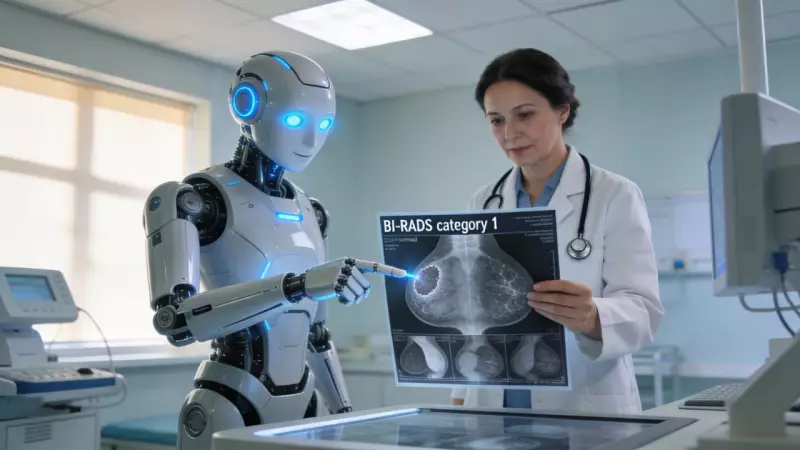
Artificial Intelligence is poised to accelerate progress in cancer screening. AI excels at processing vast, complex datasets without human error, identifying patterns and making predictions with remarkable efficiency. This partnership is crucial, as studies from the US National Cancer Institute indicate that about 20% of breast cancers are missed in traditional mammogram readings.
International trials demonstrate AI's potential. A Swedish study in The Lancet Oncology involving 80,000 women found that a team of one radiologist plus AI detected 20% more cancers than two radiologists working alone. Similar research in the US and Germany showed a 2.6% improvement in detection rates with AI assistance.
Dr. Pansari is optimistic about AI's role in India. "Small lesions missed in digital mammograms or tomosynthesis can be picked up with AI implementation," she explains. "That is how AI is going to help us in early detection."
AI's Journey into Indian Healthcare
Currently, the integration of AI into routine clinical practice in India is still under evaluation and validation. "We cannot use it for the public until trials and validation are done," Dr. Pansari cautions, while expressing hope for its adoption within the coming months or years.
Pioneering work is already underway domestically. Bengaluru-based startup NIRAMAI (Non-Invasive Risk Assessment with Machine Intelligence) has developed a thermal imaging-based tool for non-invasive breast cancer screening, showcasing the innovative spirit aimed at tackling this crisis.
India stands at a critical juncture where advancing technology, particularly AI, must converge with robust public health strategies to combat the high mortality from breast cancer. Enhancing access to and awareness of early screening remains the most powerful weapon in this fight.