Hyderabad's Mosquito Crisis Escalates During GHMC Administrative Overhaul
As the Greater Hyderabad Municipal Corporation undergoes significant internal reorganization, residents throughout Hyderabad are experiencing a dramatic escalation in mosquito-related problems, with essential vector control measures falling into disarray. The situation has reached critical levels, particularly affecting neighborhoods adjacent to neglected water bodies.
Lake Maintenance Contracts Lapse, Creating Breeding Havens
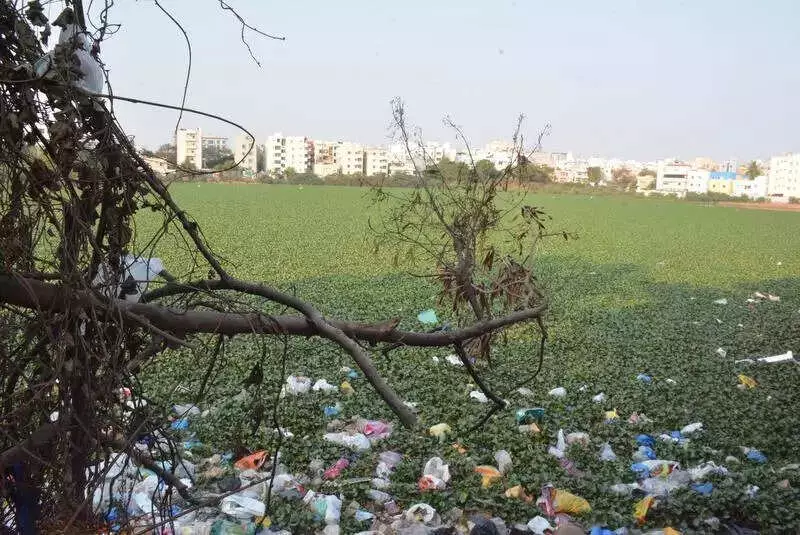
The mosquito infestation crisis has been severely aggravated by the complete stoppage of lake maintenance works since October. This interruption occurred following the expiration of crucial maintenance contracts and the GHMC's failure to renew these agreements in a timely manner. Multiple lakes across the city have become choked with invasive vegetation including horseweed and water hyacinth, transforming these water bodies into perfect mosquito breeding environments.
Residents from Moosapet, Kukatpally, Malkajgiri, Attapur, and Kapra report experiencing sleepless nights due to relentless mosquito attacks, with those living closest to stagnant water sources suffering the most severe consequences. The problem has created significant discomfort and health concerns throughout these communities.

Resident Testimonies Highlight Widespread Suffering
T Satyanarayana Reddy, president of Rainbow Vistas Rock Garden in Moosapet, provided detailed insight into the local impact: "Approximately 15,000 residents living in Rainbow Vistas Rock Garden Phases 1 and 2 and Marina Skies, located near Kamuni Cheruvu, are suffering tremendously due to the mosquito menace. Many children and elderly residents are falling sick regularly. The lake is completely choked with hyacinth and stagnant water, which has multiplied mosquitoes exponentially and made life miserable for all of us."
Ineffective Fogging and Delayed Responses
Residents from numerous localities confirm that the mosquito problem has intensified dramatically over recent weeks, forcing them to repeatedly approach GHMC officials for relief. Community members report that fogging operations, when conducted at all, occur only once every two to three weeks, providing merely temporary respite. Mosquito density increases sharply after dusk, making evenings particularly unbearable for affected residents.
BT Srinivas, general secretary of the United Federation of RWAs, explained the systemic nature of the problem: "In Malkajgiri, lakes in RK Puram, Safilguda, Kapra and East Anandbagh are heavily infested with horseweed. In our specific area, fogging was carried out nearly two weeks ago, while in other pockets it was done over three weeks ago. Despite repeated messages to civic authorities, there has been no effective or sustained response to address this growing crisis."
Public Health Concerns and Dengue Statistics
The deteriorating situation has raised serious public health concerns throughout Hyderabad. Medical facilities are reporting nearly five dengue cases daily across the city, indicating a significant health threat. According to GHMC data, Hyderabad recorded over 1,700 confirmed dengue cases during the previous year, highlighting the persistent nature of mosquito-borne disease threats in the region.
GHMC Officials Outline Planned Response Measures
GHMC officials acknowledge the severity of the situation and indicate that steps are being taken to address the mosquito infestation crisis. Authorities plan to float short-term tenders specifically aimed at clearing lakes of weeds and accumulated waste, which they identify as the primary source of the problem.
A senior official from GHMC's entomology wing emphasized the importance of comprehensive intervention: "Clearing horseweed and hyacinth is absolutely crucial before any anti-larval operations can be effective. Fogging alone provides limited temporary relief. Unless we address the problem at its source through systematic desilting and weed removal, fogging operations will not yield meaningful or lasting results for Hyderabad's residents."

The ongoing GHMC reorganization appears to have created administrative gaps that have directly contributed to the current public health challenge, with residents awaiting concrete action to alleviate their suffering.