

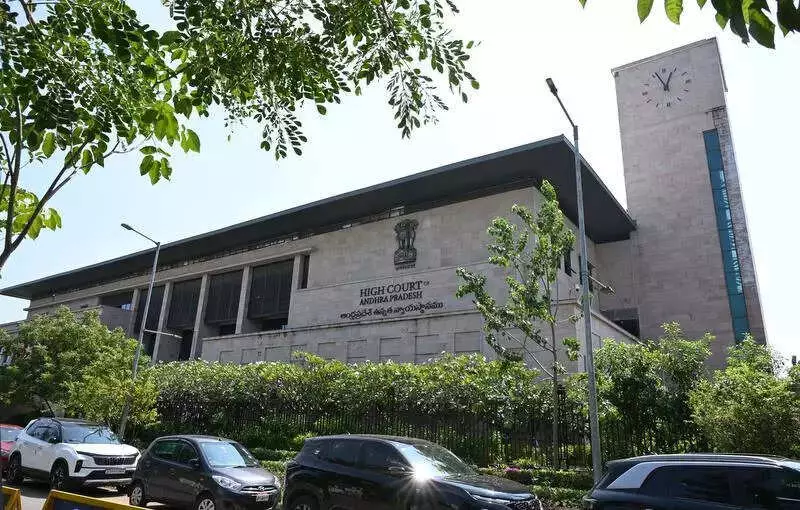
The Andhra Pradesh High Court has issued a stern directive to the state government, demanding a detailed report on the tragic deaths of students residing in tribal welfare hostels across the state. The court, expressing grave concern, highlighted that 45 students have lost their lives since 2016, a number it declared is "not a small issue."
Court Slams Official Apathy, Seeks Accountability
A bench comprising Chief Justice Dhiraj Singh Thakur and Justice Challa Gunaranjan heard a public interest litigation (PIL) filed by advocate Palaka Ranjith Kumar. The court observed that officials seemed to have failed in their duty to protect the children under their care. "It appears that officials failed to do their duties in providing healthcare facilities to the students," the bench remarked.
The judges pointed out that while authorities attribute deaths to reasons like fever, stomach pain, or infections, the underlying failure to provide adequate medical facilities remains a critical concern. The bench has ordered the state to submit a comprehensive report listing the reasons for all student deaths in these hostels statewide.

PIL Seeks Health Monitors and Compensation for Families
The PIL that brought this issue to light sought specific interventions to prevent further tragedies. The petitioner, Palaka Ranjith Kumar, requested the court to direct the government to deploy auxiliary nurse midwives (ANM) or health volunteers in all hostels to regularly monitor the health of the students.
Furthermore, the plea sought substantial financial compensation for the grieving families, demanding Rs 20 lakh for each family that lost a child. The petitioner's counsel argued that the deaths were a direct consequence of the poor living conditions prevailing in the welfare hostels.
Government's Response and Court's Further Directives
Representing the state government, Special Government Pleader S Pranathi confirmed the death figures, stating that two students had died in 2025 and a total of 45 since 2016 due to various reasons. However, she contended that the exact causes—whether due to poor conditions or other factors—needed to be ascertained through proper study.
Unsatisfied with the generic explanations, the High Court bench pressed for concrete answers and actionable plans. The court posed a crucial question: Is there an existing policy to pay compensation to the families of the victims?
In addition to the death report, the judges directed the government to outline the measures taken to conduct regular health camps in these hostels. The matter has been scheduled for further hearing on January 21, by which time the state must present its detailed report and responses to the court's queries.






