

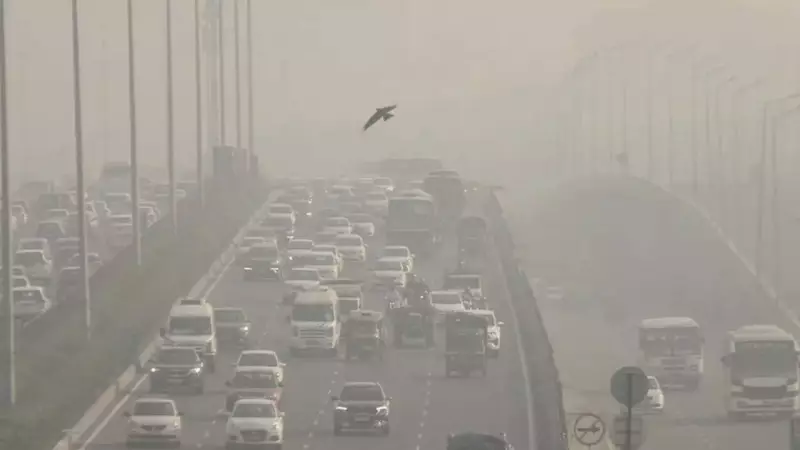
A groundbreaking new study has uncovered a hidden and dangerous component of Delhi's toxic air. Research conducted by experts from Harvard University and the Centre for Research on Energy and Clean Air (CREA) reveals that approximately one-third of the city's fine particulate matter, known as PM2.5, is composed of ammonium sulfate. This finding shifts the understanding of the capital's pollution crisis, highlighting an invisible chemical process that poses severe risks to public health.
The Invisible Culprit: How Ammonium Sulfate Forms in Delhi's Skies
Ammonium sulfate is classified as a secondary inorganic aerosol. Unlike dust or soot that comes directly from sources like vehicles or construction, it forms in the atmosphere through complex chemical reactions. The primary ingredients are sulfur dioxide (SO2), emitted by coal-fired power plants, industries, and diesel engines, and ammonia (NH3), which largely originates from agricultural activities involving fertilizers and animal waste.
When these gases meet in the air, particularly under cool and humid conditions prevalent after the monsoon and through winter, they react to form microscopic particles of ammonium sulfate. These particles are smaller than 2.5 micrometres in diameter, allowing them to remain suspended for long periods and penetrate deep into the human respiratory system when inhaled.

Seasonal Surge and a National Problem
The study's data points to a seasonal escalation that correlates with Delhi's worst air quality episodes. During peak pollution periods post-monsoon, ammonium sulfate can constitute a staggering 49% of the total PM2.5. In the winter months, its share remains alarmingly high at around 41%. This indicates that the choking winter haze is not merely visible smoke from stubble burning or dust, but is significantly amplified by this invisible chemical conversion.
This issue extends beyond the national capital. The research indicates that across various Indian states, secondary particles like ammonium sulfate contribute between 17% and 42% of the total PM2.5 pollution. This underscores a widespread environmental challenge that requires a revised approach to air quality management, focusing not just on primary emissions but also on the precursor gases that enable these atmospheric reactions.
Why Ammonium Sulfate Poses a Heightened Health Threat
PM2.5 particles are already notorious for their ability to infiltrate the lungs and enter the bloodstream. However, emerging evidence suggests that particles containing ammonium compounds may be particularly toxic. Some epidemiological studies link them to higher mortality rates and more severe impacts on cardiovascular and respiratory health compared to other particulate matter components.
Doctors in Delhi consistently report a surge in health issues during poor air quality days, including exacerbated asthma, chronic bronchitis, reduced lung function, and increased hospital admissions for heart attacks and strokes. Children, the elderly, and individuals with pre-existing conditions are the most vulnerable. The long-term exposure risks include impaired lung development in children and a heightened lifetime risk of chronic disease.
The Path Forward: Policy and Personal Protection
Addressing this specific pollutant requires a dual-pronged strategy targeting its chemical precursors. On a policy level, experts advocate for stricter enforcement of emissions standards for sulfur dioxide, including the widespread installation of flue gas desulfurization units in thermal power plants. Managing agricultural ammonia emissions through better fertilizer management practices is also crucial.
For residents, self-protection remains vital. On days when air quality indices plummet, it is advisable to:

- Use certified high-efficiency particulate air (HEPA) purifiers indoors.
- Wear N95, N99, or FFP2 standard masks when outdoors.
- Limit strenuous outdoor activities, especially for vulnerable groups.
- Stay informed about air quality levels and support comprehensive clean air policies.
The Harvard-CREA study, updated in December 2025, delivers a clear message: cleaning Delhi's air demands moving beyond visible sources. The real battle is also against the unseen chemistry unfolding in the atmosphere, a challenge that calls for sophisticated, science-based solutions to safeguard the health of millions.





