

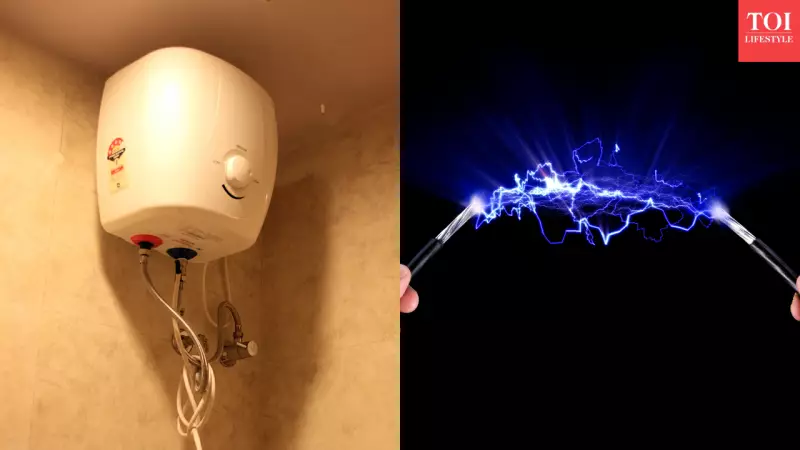
As harsh winter grips India, electric geysers become essential for hot water but also turn into silent killers when basic safety protocols are ignored. Faulty habits, such as leaving the unit running while opening taps or neglecting proper ventilation, have led to a tragic trail of preventable deaths from electrocution, scalding, and toxic fumes.
Recent Tragedies Highlight the Deadly Pattern
The grim reality of geyser misuse is reflected in recent news. On December 14, 2025, in Bulandshahr, Uttar Pradesh, fifteen-year-old Garima Rani entered her small bathroom for a morning shower. A gas geyser was running in the completely sealed room. It leaked carbon monoxide, which built up silently. She was discovered unconscious around 10:30 AM. Despite neighbours forcing the door open, she could not be revived. Doctors confirmed her death was due to asphyxiation from a complete lack of ventilation.
Just days later, on December 21 in Pilibhit, UP, a husband and wife were found dead in the locked bathroom of their rented home. Police investigations indicated that overnight operation of a geyser in a room with poor airflow allowed lethal fumes to accumulate fatally. Postmortem reports aligned with similar negligence patterns seen nationwide.

Forensic Data and Field-Based Guidance
These incidents are not isolated. A 2025 autopsy review by Parvathy R and colleagues at Goa Medical College examined 37 electrocution deaths from 2021-2023. It revealed a staggering 86% occurred in bathrooms, primarily from live electrical contact in wet environments.
This forensic evidence is reinforced by practical, field-based guidance. Haryana Police constable Amit Yadav recently took to social media to warn about the dangers of improper geyser use. He urged people to treat geysers with the same caution as any high-risk electrical appliance and shared three simple but critical safety steps:
- Always turn off the geyser at the mains switch before using the shower or tap.
- Every 15 to 20 days, use a tester to check for current leakage or earthing problems in water taps and the geyser body.
- Avoid using the setup if any tingling or shock is felt until a qualified electrician checks it.
Forensic research underscores the first rule: switching off the geyser before any tap turns on prevents current from traveling through water pipes—a simple action that saves countless lives.
Essential Mistakes to Avoid for Complete Safety
Professionals in electrical safety and medicine stress proactive maintenance over reactive fixes. Sediment buildup, power surges common in Indian grids, and bacterial growth can turn conveniences into hazards.
Avoid bathing with the unit energized. A study by Behera et al. in the 2021 Journal of Forensic and Legal Medicine dissected six immersion rod fatalities—all women at home—where current as low as 220V caused ventricular fibrillation through wet skin pathways.
Set thermostats between 40-50°C. Higher settings risk severe scalds. Chuang et al.'s 2003 analysis in the Burns journal of 66 pediatric cases linked injuries to overheated electric heaters exceeding 60°C.
Annual professional servicing is non-negotiable. Certified technicians must inspect heating elements for corrosion, safety valves for pressure release, and earthing for faults. Reject immersion rods outright as direct submersion invites instant electrocution.
Instead, opt for BIS-marked storage geysers (IS 2082:2020 compliant) with thermal cutouts and dry-heating prevention. Supervise children and elders rigorously, maintain dry floors with anti-slip mats, and store flammable materials away from units.
The protocols drawn from forensic patterns and clinical data can transform geysers from lethal liabilities into safe assets. The mandate is clear: switch off first, service without fail, and ventilate relentlessly. Professional diligence is the key to ensuring warmth without peril, protecting families throughout the winter and beyond.






