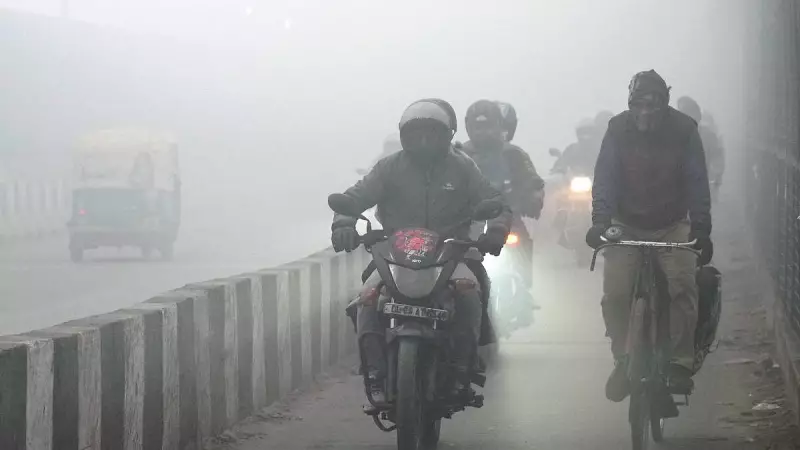
The national capital, Delhi, woke up to a thick blanket of dense fog on Wednesday morning, severely disrupting daily life and transport. The intense fog episode drastically reduced visibility, posing significant challenges for commuters and leading to delays in both air and rail travel.
Visibility Plummets, Transport Hit Hard
The India Meteorological Department (IMD) reported that visibility at the Palam observatory, near the Indira Gandhi International Airport, dropped to a mere 50 metres at 5:30 am. Conditions at the Safdarjung observatory were slightly better but still severely impacted, with visibility recorded at 200 metres. This drastic reduction led to inevitable disruptions. Several flights were delayed due to the low visibility procedures that must be followed for safe operations. Similarly, railway services across North India, including numerous trains destined for Delhi, reported significant delays, inconveniencing thousands of passengers.
Air Quality Deteriorates to the Brink of 'Severe'
Compounding the problems caused by the fog, the air quality in Delhi took a sharp turn for the worse. The overall Air Quality Index (AQI) recorded at 9 am was 384, placing it firmly in the 'Very Poor' category but alarmingly close to the 'Severe' category threshold of 401. This hazardous air poses serious health risks, especially for children, the elderly, and those with pre-existing respiratory and heart conditions. Authorities have advised citizens to limit outdoor activities and wear protective masks when going outside.

Weather Forecast and Broader Regional Impact
The IMD has issued a dense fog alert for Wednesday, indicating that these conditions are likely to persist. The fog is not isolated to Delhi alone; it has enveloped large parts of the northern plains. The weather department has forecasted:
- Dense to very dense fog in several pockets over Punjab, Haryana, Chandigarh, and Delhi.
- Dense fog in isolated pockets over Uttar Pradesh and north Rajasthan.
This widespread fog cover is a typical winter phenomenon in the region, often exacerbated by calm winds and low temperatures, which trap pollutants close to the ground. The combination of fog and high pollution levels creates a toxic smog, reducing visibility further and intensifying health hazards. Residents are urged to stay informed through official weather and pollution control body updates and to take all necessary precautions until conditions improve.