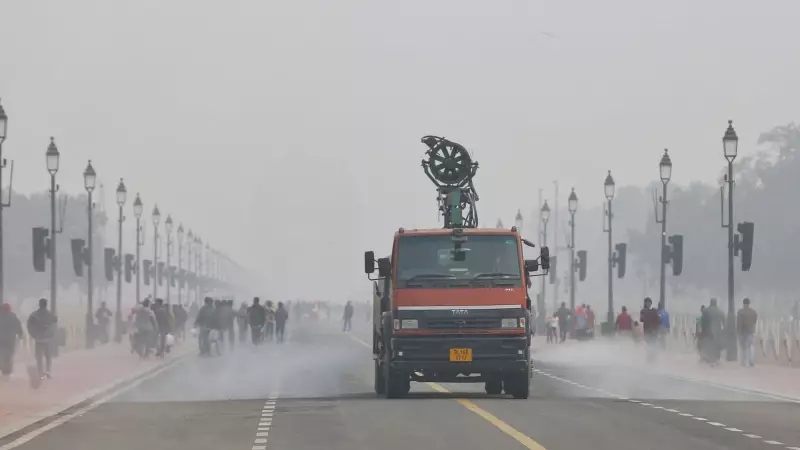
Delhi residents began their week grappling with severely degraded air quality, as a dense layer of smog enveloped the national capital on the morning of Monday, December 22, 2025. The Air Quality Index (AQI) stubbornly remained in the 'Very Poor' category, significantly reducing visibility and disrupting daily life.
Visibility Drops, Landmarks Shrouded
The hazardous smog led to notably low visibility across many parts of the city, creating difficulties for commuters and travellers. Visuals emerging from prominent areas like Akshardham and the historic Red Fort depicted iconic landmarks almost disappearing into a persistent, hazy gloom. The severe reduction in visibility was palpable, turning familiar cityscapes into blurred silhouettes.
Delhi Airport's Passenger Advisory
In response to the challenging conditions, Delhi's Indira Gandhi International (IGI) Airport issued a formal advisory for passengers. The airport authority confirmed that Low Visibility Procedures were actively in progress. While all flight operations continued normally, travellers were strongly advised to contact their respective airlines for the most current flight updates and information to avoid any inconvenience.

No Relief in Sight: Grim Pollution Forecast
Forecasts from meteorological bodies paint a bleak picture for the immediate future. According to the Indian Institute of Tropical Meteorology's (IITM) Air Quality and Weather Bulletin, air quality is expected to remain in the 'Very Poor' category through December 24. The outlook for the days following indicates a potential deterioration, with conditions likely to range from 'Very Poor' to 'Severe'.
The India Meteorological Department (IMD) noted the persistence of a western disturbance, which is leading to slightly warmer nights due to cloud cover. The IMD forecast predicts partly cloudy skies over the next couple of days, accompanied by mist and shallow fog during evening and night hours. The situation is expected to intensify later in the week, with periods of moderate to dense fog anticipated.
This smog episode follows a day after the capital recorded its first 'cold day' of the season, a condition where the maximum temperature dips significantly below normal. The combination of cold temperatures and stagnant winds is trapping pollutants close to the ground, exacerbating the public health crisis and prompting authorities to monitor the situation closely.