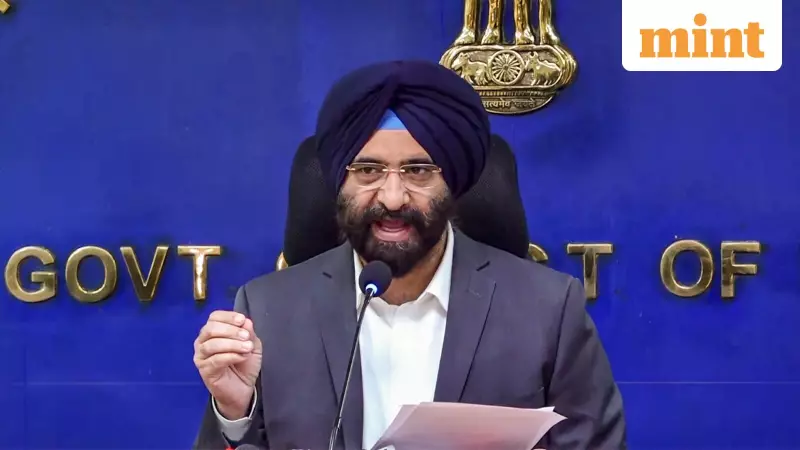
In a significant development for the national capital, Delhi Environment Minister Manjinder Singh Sirsa announced on Friday that restrictions under Stage 3 of the Graded Response Action Plan (GRAP 3) have been withdrawn. This decision comes on the back of a marked improvement in the city's air quality. However, the minister was quick to assert that the intensity of on-ground anti-pollution efforts will not see any reduction.
What Prompted the Decision to Lift GRAP 3?
The Commission for Air Quality Management (CAQM) sub-committee took the call to revoke the GRAP 3 curbs after reviewing the latest data. Delhi witnessed a remarkable turnaround in its Air Quality Index (AQI), which improved from a worrying 380 to a much better 236 within just 24 hours. The impact was particularly notable in areas like Bawana, which recorded an AQI of 141, placing it in the 'good' category.
Minister Sirsa credited this positive shift to continuous and targeted action against major pollution sources. Vehicular emissions, industrial waste, road dust, and open dumping were among the key areas where enforcement was intensified. "We are encouraged by the improvement, but this is not the time to ease our efforts," Sirsa stated, directing all agencies to maintain sustained action at the field level.

Sustained Enforcement: The Numbers Behind the Clean-Up
Data released by the Environment Department paints a picture of rigorous enforcement over the past day. The drive against pollution was comprehensive and multi-pronged:
- 6,596 challans were issued for vehicular emission violations.
- Approximately 12,000 metric tonnes of garbage were cleared from various parts of the city.
- To combat dust, a massive 6,261 kilometres of roads were mechanically swept.
- 2,315 metric tonnes of construction and demolition waste were collected for scientific disposal.
- Authorities conducted 405 inspections at illegal dumping sites, leading to 156 enforcement actions.
Furthermore, to address traffic congestion, a key pollution contributor, 40 congestion points were cleared across major corridors, and 99 light motor vehicles were penalised for violating entry norms.
Focus on Source-Level Mitigation and Future Steps
Sirsa emphasised that the government's strategy remains firmly focused on tackling pollution at its source. Pollution control teams are actively conducting compliance checks at industrial clusters. The deployment of smog guns and anti-smog vehicles continues at traffic-heavy stretches and identified hotspots.
The minister highlighted that long-term measures are also yielding results. These include legacy waste biomining at a rate of 35 metric tonnes per day and the promotion of clean technology in industrial and transport sectors. Reiterating the government's resolve, Sirsa affirmed that Delhi's fight for cleaner air is an ongoing battle, with agencies constantly strengthening and adapting their daily response to protect residents' health.