Farah Khan Reflects on Bollywood's Tumultuous Early 1990s Era
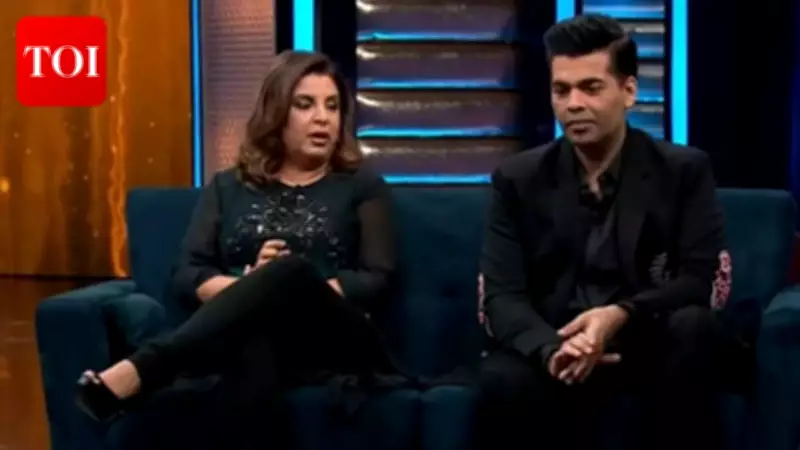
Renowned filmmaker and choreographer Farah Khan recently offered a candid look back at the challenging atmosphere within Bollywood when she first embarked on her career in the early 1990s. In a revealing podcast conversation with host Ranveer Allahbadia, Khan detailed a period when Hindi cinema was wrestling with a significant image problem and contending with the ominous presence of the underworld.
The Stigma Against Hindi Films in the 1990s
Farah Khan explained that during her college years, many individuals from her generation held a dismissive attitude toward Hindi movies, often favoring Hollywood productions instead. "I'll tell you the context of where the film industry was in the early '90s. Earlier, we used to look down upon Hindi films because of the '80s," she stated. "When we were in college, we were only watching Saturday Night Fever and Dirty Dancing — Hollywood films — and we used to look down on Hindi movies."
She attributed this widespread perception primarily to the quality of films produced during the 1980s, which she described as the worst era of Hindi cinema. "You guys may not remember the '80s, but it was the worst era of Hindi films," Khan remarked. "There were all those multi-hero films — Mithun-style or three-hero movies. You had Dharmendra ji, Jeetendra ji, Shatrughan Sinha all coming together, but you can't even remember one particular film clearly."

While many of these 1980s movies have gained a second life as popular memes in the digital age, Khan emphasized that the reality at the time was starkly different. "Maybe right now they are famous in the meme world, but at that time it was a very different phase for Hindi cinema," she noted, highlighting the disconnect between contemporary nostalgia and the original reception.
Underworld Threats and Industry Tensions
Beyond the image struggles, Farah Khan also recalled the palpable fear that permeated Bollywood due to the growing influence of the underworld in the 1990s. "We heard a lot about underworld stories from that era," she shared, pointing to a specific incident that left a deep impact on the industry.
"I remember I had just started my career — it must have been around 1993 or 1994 — and producer Mukesh Duggal was shot. That really shook everyone," Khan revealed, underscoring the violent realities that filmmakers and producers faced.
The tension extended to high-profile events, such as film premieres. Khan disclosed that during the premieres of Duplicate and Kuch Kuch Hota Hai, director Karan Johar received an underworld threat. "It was very scary," she said, describing the ensuing discussions about whether to cancel the premiere. "Everyone was discussing whether the premiere should be cancelled or not. Security was beefed up."
Despite the heightened anxiety, the team ultimately decided to proceed with the event. "We did go ahead with the premiere, but Karan was very stressed. Imagine it's your first film and instead of celebrating it, you're dealing with threats and worrying about security," Khan reflected, painting a vivid picture of the pressures that overshadowed what should have been a celebratory occasion.
A Broader Look at Bollywood's Evolution
Farah Khan's recollections provide a valuable historical perspective on Bollywood's journey through a decade marked by both creative challenges and external threats. Her insights shed light on:
- The significant shift in audience preferences from Hollywood to Hindi cinema over the years.
- The impact of underworld activities on the day-to-day operations and morale within the film industry.
- The resilience of filmmakers who navigated these turbulent times to eventually help Bollywood regain its stature and global appeal.
This period of transition in the early 1990s set the stage for the subsequent transformations that would redefine Indian cinema, making Khan's firsthand account an important narrative in understanding Bollywood's complex history.