Chandigarh's Mauli Jagran: A Child's Tragic Death Exposes Chronic Sewage Crisis
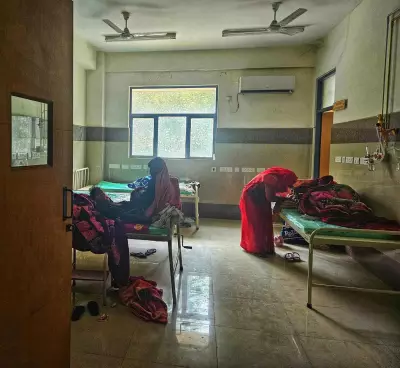
In the filth-ridden streets of Mauli Jagran, Chandigarh, a heart-wrenching scene unfolded on Friday. A father, his hands trembling with grief, wrapped his eight-year-old daughter in a pristine white cloth—a stark, painful contrast to the sewage-caked environment surrounding them. He carefully packed her blankets and medicines before placing her gently in a tempo for her final journey. This devastating farewell followed the child's death after being rushed from a government hospital in Panchkula to PGI, Chandigarh, where she was declared brought dead.
A Father's Anguish and a Community's Plight
The grieving father, Suraj Kumar, a CTU bus conductor, believes his daughter's death is directly linked to the unhygienic conditions plaguing their locality. "Many children here used to fall ill with jaundice and water-borne diseases, but I never thought my daughter would meet the same fate," he lamented. "She was our only child. Now, my wife and I will have to live with this void for the rest of our lives." He and other residents point to the road outside their homes, which resembles a swamp reeking of sewage overflow, as evidence of the hazardous environment.
Years of Neglect and Unheeded Complaints
Councillor Ram Chander Yadav revealed that he has been raising this critical issue in house meetings for the past four years, with little to no action taken. "Nothing changes. Sewage water continues to flow through taps, and sickness is everywhere," he stated. Despite the Municipal Corporation's chief engineer announcing that random water samples were collected for testing after receiving complaints, residents remain skeptical. Kanu Verma, who has actively filed complaints through government apps and the CPGRAMS portal, expressed frustration, noting that her and her niece's recent recovery from jaundice and typhoid has done little to spur change.

Widespread Health Crisis and Daily Struggles
The health impact on Mauli Jagran's residents is severe and widespread. Common ailments include:
- Persistent stomach aches
- Diarrhoea
- Typhoid
- Jaundice
- Hepatitis in severe cases
Shanti Devi described the dire situation: "There are days when we don't have water supply at all. When it does come, it is muddy or has a foul smell." Local doctor Anita Garg, with 11 years of service in the area, reported that the past two months have been the worst for water-borne diseases, with four to five cases emerging daily. Another anonymous doctor, practicing for 28 years, confirmed that the water issue has never been permanently resolved.
Broader Implications and Systemic Failures
Councillor Manoj Kumar acknowledged that while complaints sometimes lead to water testing and sewage clearance, the ground reality remains grim. He added that all three tubewells in the area ceased functioning four to five days ago, with repair work currently underway. This crisis is not isolated to Mauli Jagran; similar complaints have emerged from Sector 49, Chandigarh, where residents reported foul-smelling water. Although temporarily resolved, they had to spend their own money on sewage pipe repairs, and the smell occasionally returns.
With another child lost to what residents fear is preventable tragedy, the community lives in constant dread. Bineeta, whose daughter recovered from jaundice two months ago, voiced a common fear: "It feels like the danger is always looming." As repeated complaints and sampling yield little tangible improvement, families across Mauli Jagran worry that more lives may be at risk unless decisive action is taken to address the sewage and water contamination crisis once and for all.