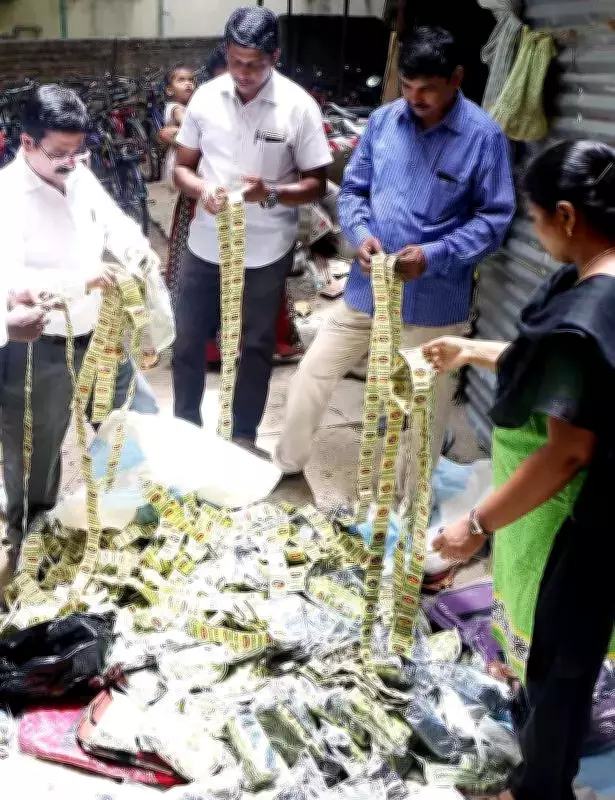
Chennai's Tobacco Enforcement Challenge: Despite Massive Seizures, Illegal Trade Persists
As World Cancer Day approaches, enforcement data from Chennai and its surrounding suburbs reveals a concerning paradox in public health regulation. While narcotics seizures frequently dominate law enforcement headlines, tobacco products—responsible for significantly more deaths and health complications—continue to circulate with comparatively less scrutiny, quietly thriving across neighborhood shops and retail outlets throughout the metropolitan region.
Substantial Enforcement Actions Yield Limited Deterrence
Over the past year, Avadi city police authorities have seized nearly 18,000 kilograms of tobacco products, arrested approximately 500 individuals, and sealed 281 retail establishments. In Chennai proper, officials confiscated an additional 9,000 kilograms, made 2,300 arrests, and sealed 355 shops. Despite these substantial enforcement actions, chewable tobacco products remain readily available in petty shops, pan stalls, and various retail establishments throughout the city.
These products are commonly purchased by diverse demographic groups including students, heavy-vehicle drivers, and guest workers, indicating widespread accessibility across different segments of the population. The persistence of this availability despite enforcement efforts points to systemic challenges in tobacco regulation and control.

School Zone Violations Highlight Accessibility Concerns
The concerning 'easy access' phenomenon near educational institutions is substantiated by independent academic research. A representative sample study published last year in the journal BMC Medicine documented that tobacco outlets were disproportionately accessible near school zones throughout Chennai. Researchers identified 1,650 retail outlets near 247 randomly selected schools across the city, with 392 shops selling tobacco products located within 100 yards of school premises—a clear violation of existing regulations.
Police authorities reported that the food safety department sealed nearly 300 such shops during coordinated raids last year. However, legal experts note significant challenges in prosecution and deterrence. Advocate R Chander explained that violations booked under the Cigarettes and Other Tobacco Products Act, 2003, are frequently treated as minor offences, with many offenders paying nominal fines of approximately 200 rupees and resuming business operations almost immediately.
When banned chewable products such as gutka are detected, cases are typically registered under the more stringent Food Safety and Standards Act, 2006, where penalties can reach 25,000 rupees or more. This legal distinction has prompted enforcement agencies to reconsider their strategic approach to tobacco regulation.
Strategic Shift: Targeting Supply Chains Rather Than Retailers
In response to these challenges, enforcement authorities have implemented a strategic shift in their operational focus. Instead of concentrating primarily on retail establishments, officers now increasingly target godowns, warehouses, and distribution points that supply the city's extensive tobacco network. This supply-chain approach aims to disrupt the flow of products at critical junctures rather than addressing only the final retail point of sale.
According to investigative sources, much of the tobacco entering Chennai originates from states including Gujarat, Madhya Pradesh, Karnataka, Andhra Pradesh, and Telangana, where certain chewable tobacco products face fewer regulatory restrictions or outright bans. Transportation into the metropolitan area occurs primarily through road and rail networks, often utilizing container lorries and freight vehicles.
Key distribution drop points identified by enforcement teams include Sriperumbudur, Red Hills, Gummidipoondi, Madhavaram, and Puzhal, where larger shipments are broken down into smaller consignments for distribution throughout the city, often using smaller vehicles to avoid regulatory checks and enforcement scrutiny.

Sophisticated Concealment Methods Mirror Narcotics Trade
Enforcement teams report that concealment methods for tobacco shipments increasingly mirror those employed in ganja transportation networks. Tobacco consignments are frequently hidden within legitimate cargo using various sophisticated techniques including false floors in transport trucks, double-walled cartons, and concealed compartments within loads of vegetables, fruits, textiles, grain sacks, tiles, or cement bags.
Multiple plastic layers and strong-smelling substances such as coffee or spices are routinely employed to mask distinctive odors that might alert enforcement personnel. Investigators note that repeated small consignments delivered to the same addresses and shipments with vague or incomplete sender details represent typical red flags in this illicit trade.
At the retail level, banned gutka and chewing-tobacco sachets are commonly hidden in back rooms within biscuit, dress, and tea cartons. Retailers also frequently mix tobacco products with supari and mouth-freshener stock to avoid detection during routine inspections and enforcement checks.
Evolving Operational Tactics in the Digital Age
Recent enforcement actions have uncovered innovative operational tactics employed by tobacco distribution networks. Investigators discovered a new modus operandi during recent crackdowns where criminal groups borrow basic mobile phones from unsuspecting individuals at Tasmac outlets, use those numbers to activate WhatsApp accounts on their personal smartphones, and continue business operations using these untraceable digital contacts.
The substantial profit margins in this illicit trade provide powerful economic incentives for continued operation despite enforcement risks. According to Azad, recently apprehended during a raid, a carton of a popular chewing-tobacco brand containing 500 sachets purchased for approximately 13,500 rupees sells in Chennai for nearly 46,000 rupees. Similarly, Hans brand products purchased for 7,200 rupees (500 sachets) reportedly sell for almost double that price, indicating the significant profit margins that sustain this illegal commercial activity.
Structural Gaps in Enforcement Framework
Law enforcement officers highlight a significant structural gap in Chennai's regulatory framework. While the city maintains special teams dedicated specifically to monitoring ganja sales and distribution, no comparable specialized unit focuses exclusively on tobacco violations and enforcement. This institutional disparity creates challenges in developing targeted expertise and sustained enforcement pressure against tobacco networks.
A senior police officer from Tiruvallur district explained the strategic rationale behind focusing on distribution points rather than retailers: "We have established special enforcement teams in these areas because they function as critical transit points in the supply chain. Our operational strategy prioritizes targeting godowns and warehouses rather than individual retail establishments. In many cases, even distributors lack detailed knowledge about their original suppliers, creating challenges in tracing products to their source."
This enforcement approach reflects the complex, multi-layered nature of Chennai's tobacco distribution networks and the ongoing challenges authorities face in effectively regulating this persistent public health concern.