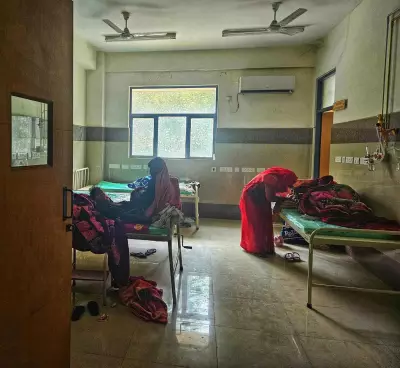
Residents of Gond Basti in Bhopal's Gandhinagar area continue to live with a dangerous reality: the drinking water pipeline supplying nearly 200 households runs directly beneath an open sewage lane. Despite this glaring infrastructure failure, the official narrative on water safety has swung wildly, leaving the community confused and at risk.
Conflicting Lab Reports: From Contamination to "Clear"
In June, a test conducted by the State Research Laboratory (SRL) under the Public Health Engineering Department (PHED) sounded a major alarm. The report found severe sewage contamination in the water supply. Faecal coliform levels were recorded at a dangerous 1200, far above the accepted standard of 0. Biochemical Oxygen Demand (BOD) ranged between 7–40 mg/l, exceeding the safe limit of 3 mg/l, and clear signs of E. coli were present. The lab report explicitly warned of risks including diarrhoea, cholera, typhoid, and hepatitis.
Six months later, on January 3, in the wake of a water contamination scare in Indore, the Bhopal Municipal Corporation (BMC) tested the same water supply and declared it "good for human consumption." This stark contrast drew ironic smiles from residents when visited on Sunday. The June report flagged contamination in clear-looking water, while January's test offered reassurance without addressing the unchanged, hazardous pipeline alignment.

Official Denials and Ground Realities
The area falls under Ward 1 of the BMC. Local corporator Laxman Rajput openly questioned the January 3 sampling process. "Water sampling should be carried out in the presence of elected corporators," he said. "The supply here is not fit for drinking, and even the overhead tank is in a dilapidated state."
When contacted, BMC city engineer Udit Garg offered a technical defence. "The detection of chlorine in water rules out the presence of E. coli. Despite that, we are testing all the samples for E. coli. BMC takes measures only if any contamination is found," he stated.
TOI tracked down the house where BMC collected its sample. Kajal, a teenager living there, confirmed officials took water directly from her tap. She explained the settlement receives water only on alternate days. When told of the BMC's "clear" claim, Kajal countered, "It may look clean sometimes, but dirt often comes through, and people here fall sick because of it." With no access to water purifiers, families resort to straining water through a piece of cloth to make it drinkable.
Health Fallout and a Poverty Narrative
Unsafe drinking water is frequently linked to the poor health of children in Gond Basti. However, when contacted, local health workers, who requested anonymity, largely attributed the children's condition to low household incomes and inadequate nutrition. "Khoon ki kami hai (There is a deficiency of blood)," one said, noting frequent anaemia and struggles to afford balanced diets.
One health worker admitted that skin rashes and eruptions are common among kids but leaned on explanations of poverty and food scarcity. This narrative carefully sidestepped the role of contaminated water, which residents consistently identify as a daily cause of illness. The community's lived experience stands in direct contradiction to the BMC's recent clean chit, highlighting a critical gap between official reports and the persistent public health crisis unfolding in the shadow of sewage lines.