
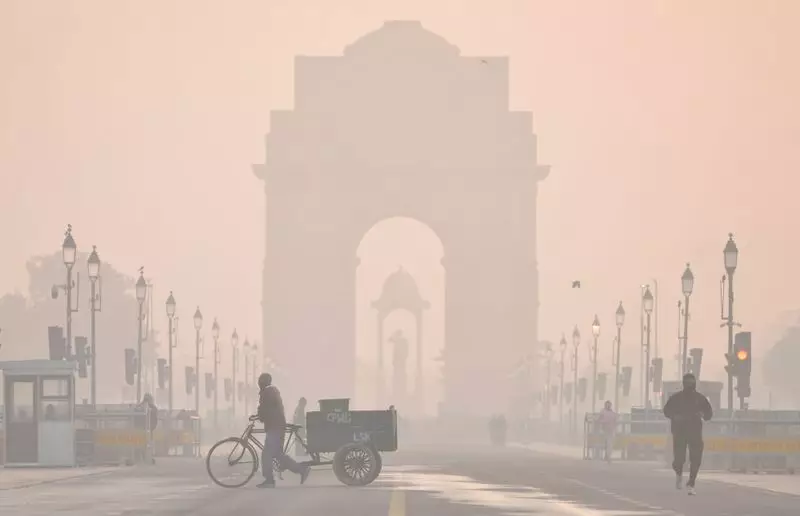
Leading medical professionals across India have issued a stark warning, declaring the country's deteriorating air quality as its most significant public health challenge since the COVID-19 pandemic. The crisis, particularly acute in the northern plains including the National Capital Region (NCR), is flooding hospitals with patients suffering from severe respiratory and cardiac conditions.
Hospitals Overwhelmed as Toxic Air Takes Its Toll
Doctors report a dramatic surge in cases of asthma, bronchitis, chronic obstructive pulmonary disease (COPD), and lung infections. Dr. Randeep Guleria, former director of AIIMS, Delhi, emphasized the severity, stating that the health impact of air pollution is now comparable to the damage caused by smoking. He highlighted that poor air quality severely affects not just the lungs but also the heart, brain, and overall health of vulnerable populations like children and the elderly.
The situation has become so dire that hospitals are seeing a 20-30% increase in relevant OPD cases. Dr. Nevin Kishore, Head of Bronchology at Max Hospital, noted that non-smokers are presenting with lung damage typically associated with long-term tobacco use, a direct consequence of breathing polluted air. The financial burden is also immense, with families facing significant costs for treatments, inhalers, and air purifiers.
A Multifaceted Threat to Public Health
The crisis extends beyond immediate respiratory distress. Medical experts are drawing clear connections between sustained exposure to high levels of particulate matter (PM2.5 and PM10) and a host of other serious ailments.
Dr. Arvind Kumar, Chairman of the Institute of Chest Surgery at Medanta Hospital, provided a powerful visual analogy, suggesting that every Indian child's lungs are now akin to a "smoker's lungs" due to constant pollution exposure from birth. He warned of an impending epidemic of lung cancer and other chronic diseases if the issue is not addressed with urgency.
The health implications are vast and systemic:
- Cardiovascular Damage: Pollutants enter the bloodstream, inflaming blood vessels and increasing risks of heart attacks and strokes.
- Neurological Impact: Studies link air pollution to cognitive decline, dementia, and adverse effects on mental health.
- Pregnancy Complications: Exposure is associated with low birth weight, preterm births, and developmental issues in children.
An Urgent Call for Systemic Action
The medical community is unanimous in its call for immediate and sustained action, moving beyond short-term fixes. They stress that treating patients in hospitals is merely addressing the symptoms, not the root cause of the disease.
Doctors advocate for a multi-pronged strategy that includes stringent enforcement of pollution control measures, a rapid transition to cleaner energy and transportation, effective waste management to prevent stubble and garbage burning, and the creation of green buffers in urban areas. Public awareness is also considered crucial, with recommendations for people to monitor the Air Quality Index (AQI), use N95/99 masks outdoors on poor air days, and employ air purifiers indoors.
The consensus is clear: air pollution is no longer just an environmental or visibility issue—it is a full-blown national health emergency. The warnings from India's top doctors signal that the time for incremental change has passed. The toxic air is causing a slow-motion public health disaster, demanding a response as coordinated and serious as the one mounted against the coronavirus pandemic.