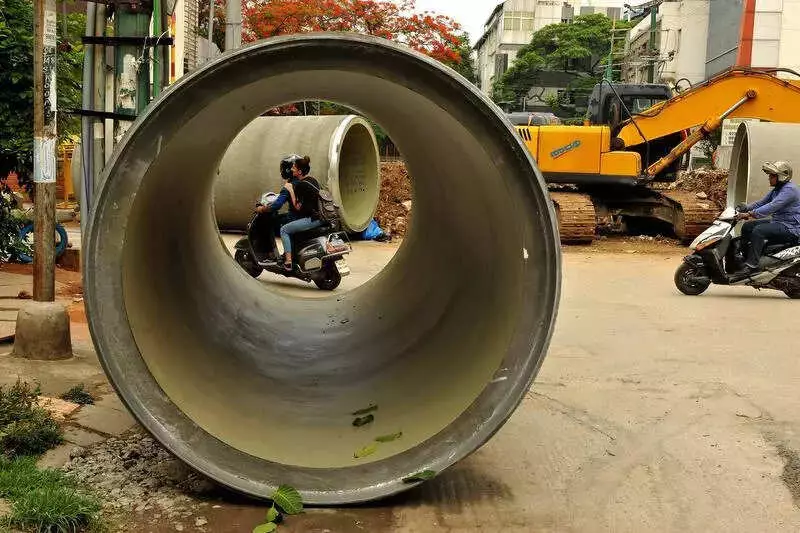
Spurred by recent water contamination crises in neighbouring Indore and Gandhinagar, the Ahmedabad Municipal Corporation (AMC) has announced a massive infrastructural overhaul to safeguard its drinking water supply. The civic body will invest a substantial Rs 300 crore to lay new pipelines in 26 high-risk areas identified across the city, aiming to create a permanent barrier between potable water and sewage lines.
Multi-Pronged Strategy for Safe Water
The AMC's plan extends beyond just pipeline replacement. In a decisive move, the corporation has mandated all 170 packaged drinking water suppliers in Ahmedabad to compulsorily install chlorine dosers and mix chlorine in their water. This directive came after a high-level meeting between AMC officials and the suppliers. Deputy Municipal Commissioner Bharat Parmar stated that suppliers have been instructed to purify and chlorinate water, test chlorine levels daily, maintain equipment hygiene, and ensure overall cleanliness on their premises, with strict action promised for non-compliance.
"The civic body is taking various steps to prevent and control waterborne diseases like typhoid, jaundice, diarrhoea, vomiting, and cholera," explained an AMC official. The measures include rigorous testing of water samples, distribution of chlorine tablets, destruction of unhygienic food items, public awareness campaigns, and legal action against those endangering public health.
Enhanced Testing and Fire Safety Expansion
Standing Committee Chairman Devang Dani revealed an upgrade to the city's water testing protocol. While chlorine testing is already routine at distribution stations, arrangements will now be made to also check for the presence of E. coli bacteria, a key indicator of faecal contamination. In a parallel development focused on civic safety, the AMC also decided to construct new fire stations in Ranip, Hathijan, and two other locations. Dani outlined a broader vision, stating, "There are plans to construct 15 new fire stations in the next 5 years," with necessary staff to be recruited before the inauguration of the first four.
Opposition Protests and Gandhinagar's Ongoing Battle
The urgency of Ahmedabad's actions is underscored by the ongoing situation in the state capital. Gandhinagar recorded 14 new typhoid cases on a single Thursday, taking the active case count to 80. The Gandhinagar Municipal Corporation (GMC), in its containment efforts, has repaired 48 pipeline leakages and tested 3,110 water samples, of which 2,977 met safety standards.
Meanwhile, in Ahmedabad, political pressure mounted as the opposition, led by Shehzad Khan Pathan, staged a protest at the AMC headquarters in Danapith. Pathan presented Mayor Pratibha Jain with a sample of polluted water, alleging that over 150 areas, primarily in the Old City and eastern zones, are suffering from contamination and a spike in waterborne diseases. Echoing these concerns, Congress MP Shaktisinh Gohil urged the government to prioritise delivering pure drinking water instead of downplaying the public health crisis.
The combined picture from Ahmedabad and Gandhinagar highlights a critical public health challenge in Gujarat's major urban centres. Ahmedabad's Rs 300 crore pipeline project and stringent new rules for water suppliers represent a significant, proactive investment aimed at preventing the kind of outbreaks currently affecting its neighbour, ensuring long-term water security for its residents.