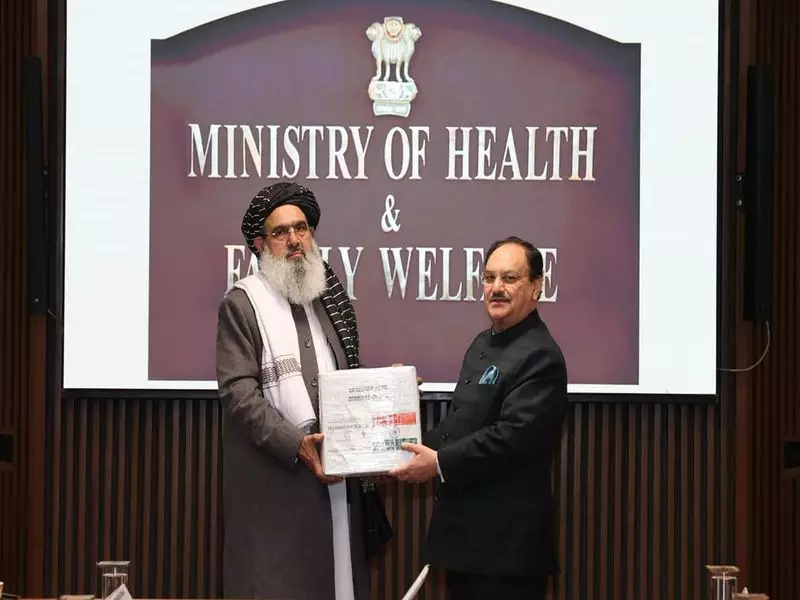
In a significant diplomatic and health-focused engagement, Afghanistan's acting Minister of Public Health, Dr. Qalandar Ebad, paid an official visit to India. The visit, which took place from August 16 to 21, was centered on strengthening bilateral healthcare ties and participating in a major global health conference.
High-Level Talks on Bilateral Healthcare Cooperation
During his stay, Minister Ebad engaged in crucial discussions with Indian officials aimed at enhancing collaboration in the health sector between the two nations. He met with Dr. Mansukh Mandaviya, India's Union Minister of Health and Family Welfare and Minister of Chemicals and Fertilizers.
The talks focused on identifying concrete areas for partnership to bolster Afghanistan's healthcare infrastructure and systems. This dialogue is seen as a continuation of India's historical support for development projects in Afghanistan, even after the Taliban's return to power in Kabul in August 2021.
Participation at the WHO Global Summit
A key highlight of the minister's itinerary was his attendance at the World Health Organization (WHO) Global Summit on Traditional Medicine. The high-profile summit was held in Gandhinagar, Gujarat, from August 17 to 18.
The summit brought together health ministers, practitioners, and experts from across the globe to discuss the integration of traditional medicine into modern healthcare systems. Minister Ebad's participation provided Afghanistan a platform to share its perspectives and learn from global best practices in this field.
Focus on Traditional Medicine and Future Collaboration
The visit underscores the potential for cooperation in traditional medicine, an area where both India, with its ancient systems like Ayurveda, and Afghanistan have rich histories. The discussions in Gandhinagar likely covered knowledge exchange, research, and regulatory frameworks for traditional practices.
While India has not formally recognized the Taliban government, it has maintained a diplomatic presence in Kabul and has sent humanitarian aid, including medical supplies and vaccines. This visit by a senior Afghan minister indicates a cautious but ongoing channel of communication, particularly on issues of direct humanitarian and developmental importance like public health.
The outcomes of the talks could pave the way for:
- Training programs for Afghan healthcare professionals in India.
- Collaboration on pharmaceutical supply chains and drug regulation.
- Joint initiatives in maternal and child health, disease control, and nutrition.
- Knowledge sharing in traditional medicine research and practice.
Minister Ebad's visit marks a notable step in maintaining people-centric engagement between India and Afghanistan during a challenging period for the Afghan people, emphasizing health as a neutral ground for constructive dialogue.